Performance
Jimmy Robert
Draw the Line
21 Jan 2026
21 Jan 2026
The event is over
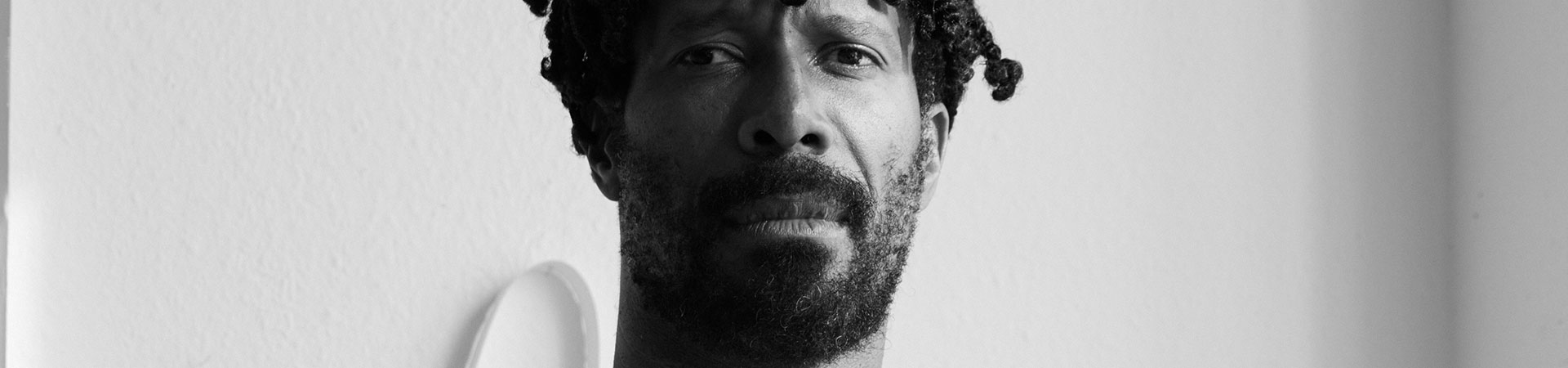
Jimmy Robert’s multidisciplinary practice encompasses performance, photography, film and collage, frequently collapsing distinctions between these mediums. Robert’s interest in how the body can be personified through materials and the reverse is a forcethat integrates his longtime work with performance with his larger practice. With Malick Cissé
Robert has choreographed performance swithin exhibition spaces, in relation to existing architectural structures, as well as re-staging, reframing or sampling historical performances. The frequent citation of moments from art history, film and literature is characterisc of his deeply layered narratives.
Born in Guadeloupe (FR) in 1975, Jimmy Robert currently lives and works between Paris and Berlin. His institutional solo exhibitions include Moderna Museet, Malmö (2023); Centre National de la Danse, Paris–Pantin (2023) ; Kunsthalle Baden-Baden (2022); Künstlerhaus Bremen (2022); The Hunterian,Glasgow (2021); Museion, Bolzano (2021); Nottingham Contemporary (2020); Leopold Hoesch Museum, Düren (2020) ; La Synagogue de Delme, France (2016); Museum M, Leuven (2015); The Power Plant, Toronto (2013); Museum of Contemporary Art Chicago (2012); and Jeu de Paume, Paris (2012), among others. His performances have also been presented at Tate Britain, London;MoMA, New York; Migros Museum, Zurich; KW Institute for Contemporary Art , Berlin; and Kunsthalle Basel.Robert’s work is held in numerous public collections, including FRAC Grand Large – Hauts-de-France, Dunkirk; Centre National des Arts Plastiques, Paris ; Stedelijk Museum, Amsterdam; Museum of Contemporary Art Chicago ; Moderna Museet, Malmö and Stockholm ; FRAC Île-de-France, Paris; Museum of Modern Art, Warsaw; Los Angeles County Museum of Art; Walker Art Center, Minneapolis; and The Hunterian, Glasgow.
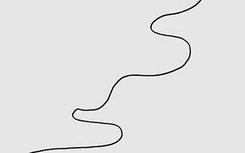
Draw the Line is a performance built around withholding, absence, and the tension between movement and its trace. For the 20-minute piece, Robert used a single roll of paper as both prop and constraint: rolled up, it guided the gestures of his choreography; unrolled and taped to the floor, it became the surface upon which he traced those movements. After the performance ended, what remained was not the mark of the artist’s body but the scuffing left by visitors walking across the paper—emphasizing disappearance, delay, and the impossibility of fully capturing embodied action. The work also dialogues with Carolee Schneemann’s Up To and Including Her Limits, transforming her score into a sculptural and conceptual material rather than reenacting it literally. Robert stages an encounter where body, language, and surface keep slipping out of view, asking what meaning remains once the performance itself is gone.
Partners
Programme coproduit par le Drawing Lab et le Centre Pompidou

© Roman Goebel