Exhibition
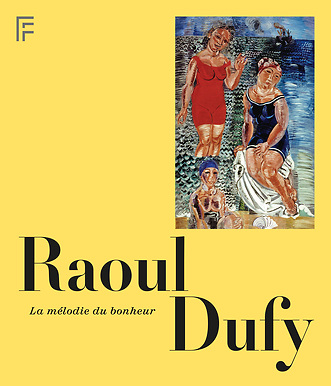
Raoul Dufy
La mélodie du bonheur
27 Jun - 20 Sep 2026
27 Jun - 20 Sep 2026
The event is over
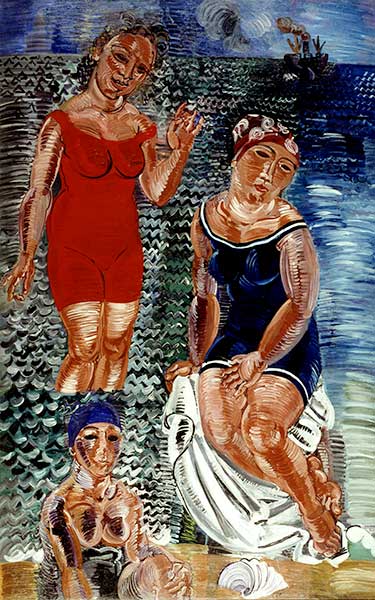
Raoul Dufy, « Baigneuses », 1919 - Crédit photographique : Centre Pompidou, MNAM-CCI/Jean-François Tomasian/Dist. GrandPalaisRmn
This retrospective (the first collaboration in the partnership between Les Franciscaines de Deauville and Centre Pompidou) is devoted to one of the most popular artists from the French scene in the first half of the 20th century. It pays tribute to the exceptionally diverse genius of Raoul Dufy (1877– 1953), which, far from being limited to easel painting alone, extends to drawing, engraving, ceramics and textile art.
Raoul Dufy, « Baigneuses », 1919 - Crédit photographique : Centre Pompidou, MNAM-CCI/Jean-François Tomasian/Dist. GrandPalaisRmn
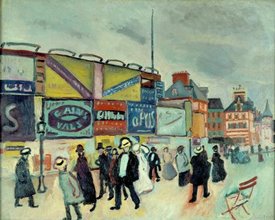
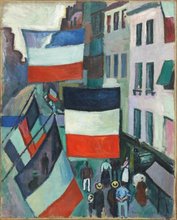
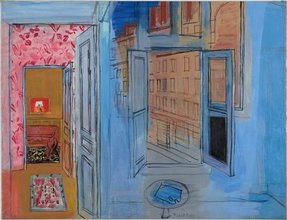
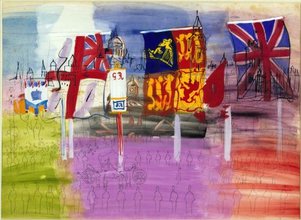
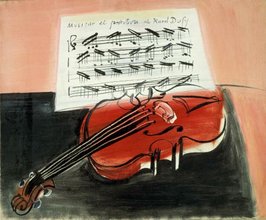
The exhibition presents around 100 works in the artist’s immediately recognisable style (including some 60 paintings), taken from the considerable collection of the artist’s work held by Centre Pompidou. It explores his Normandy connections and his musical inspirations, among other things.
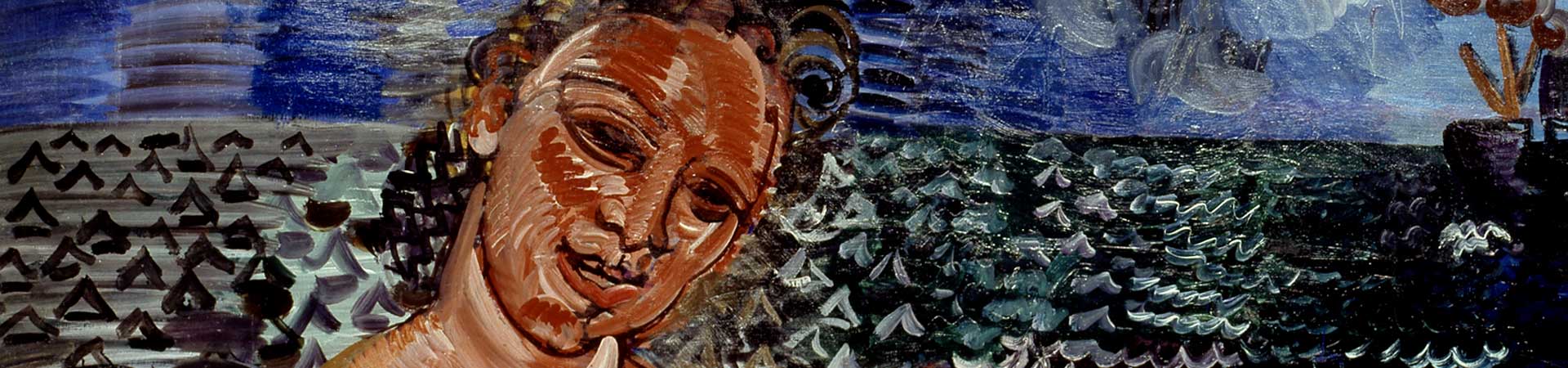
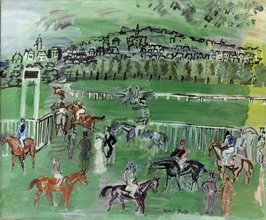
Dufy was born in Le Havre and often drew inspiration for his painting from coastal scenes that he populated with allegorical female figures, combining them imaginatively with small horses. Furthermore, he achieved real success with his racecourses, often observed in Deauville, where he stayed several times.
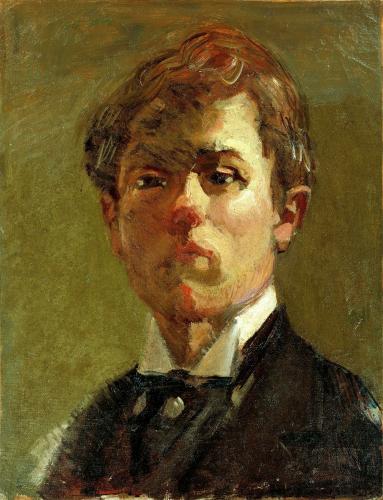
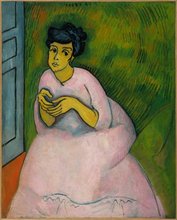
First trained in Le Havre, Raoul Dufy was a well-educated music-lover from a family of musicians. He became known as a landscape artist, following in the footsteps of Impressionism. From 1906 on, he was among the most important painters of the Fauve movement in Paris. Dufy also tried his hand at Cubism with his friend Georges Braque, painting geometrised views of L'Estaque near Marseille with him in 1908.
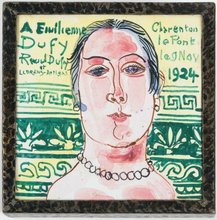
In the 1910s, he developed a passion for popular art, seeking to undertake a “renovation”. In 1924, along with the ceramist Josep Llorens Artigas, Dufy began to produce charming earthenware vases and tiles in which his innate feeling for decor produced wonders, as was the case with textile art, which he was also making at the time.
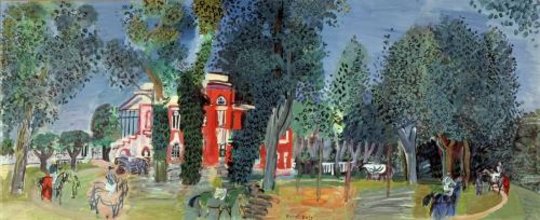
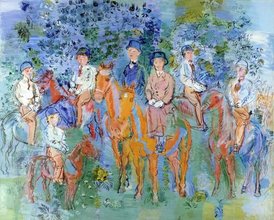
Dufy also breathed fresh life into the portrait genre, by having models from the world of art and literature pose for him. Commissioned in 1930 by a British family, the Kesslers, the monumental portrait of a group on horseback is one of his masterpieces in the genre.
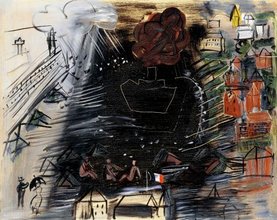
The exhibition concludes with the final moving series of Cargos noirs (Black Cargo Ships). For this evocation of the port of his hometown, which was almost completely destroyed at the end of World War II, Dufy used large blocks of black to represent how our eyes are dazzled by sunlight.
Where
When
27 Jun - 20 Sep 2026
10:30am - 6:30pm, every days except mondays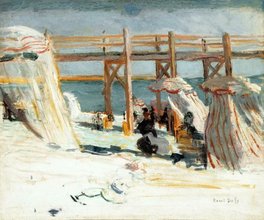
Partners
Exposition coorganisée par Les Franciscaines Deauville et le Centre Pompidou

In the shop