Centre Pompidou Francilien – fabrique de l’art, in Massy
Centre Pompidou is establishing a new site in Massy, in the southern Île-de-France region.
Covering an area of 30,000 square metres and conceived as a model for an innovative art institution, the new venue will serve as both:
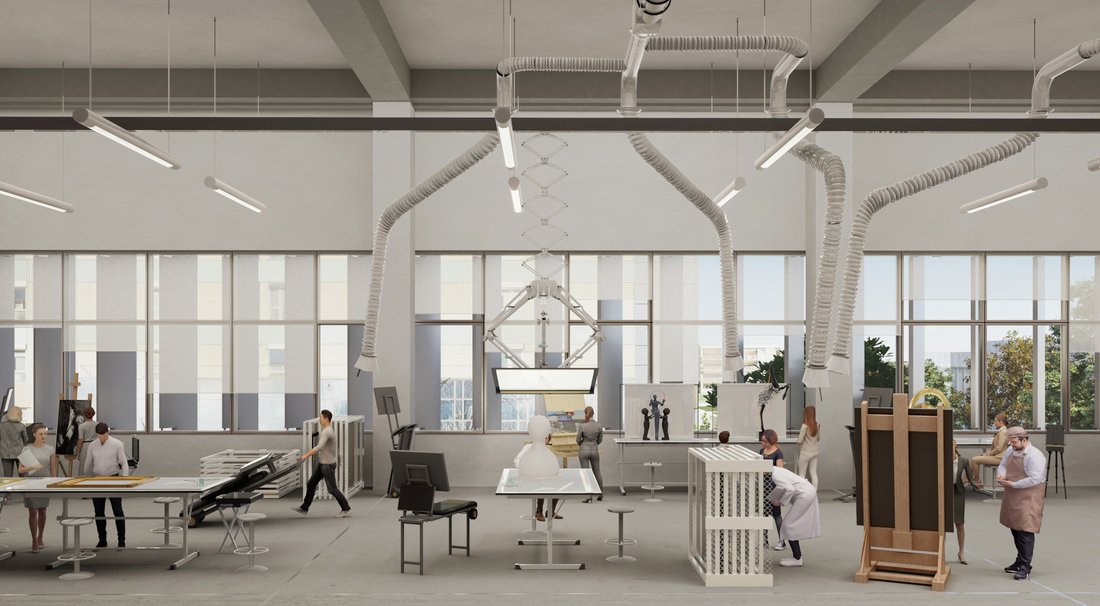
- a centre of excellence for the conservation and restoration of the 150,000 works in its collection;
- an exhibition and public engagement venue, offering visitors an unprecedented opportunity to discover the life of artworks up close.
Preserving and sharing: the Centre Pompidou Francilien – fabrique de l’art embodies a new vision of the museum.
Centre Pompidou Francilien will open its doors in spring 2027.
Get a first look at the venue this autumn during three festive weekends, free and open to all.
An optimal conservation hub
Centre Pompidou houses one of the two largest collections of modern and contemporary art in the world, and the largest in Europe. Comprising some 150,000 works, this national collection, owned by the French State and held by the Musée national d’art moderne, is unparalleled in the diversity of creative fields and disciplines it encompasses.
The continual expansion of the collection, through three acquisition committees each year, together with the scale of its loans, more than 6,000 per year across France and internationally, make its reserves a strategic priority of the highest order in terms of conservation.
Constrained by the limited capacity of its current reserves, located in the north of Paris, Centre Pompidou sought to establish a facility that would offer:
- direct access to major transport routes, close to the motorway network and Paris-Orly Airport, to facilitate the transportation of artworks;
- more spacious premises;
- state-of-the-art facilities tailored to the preservation of its collection, while embracing innovations in conservation and restoration practices.
An exhibition and public engagement space
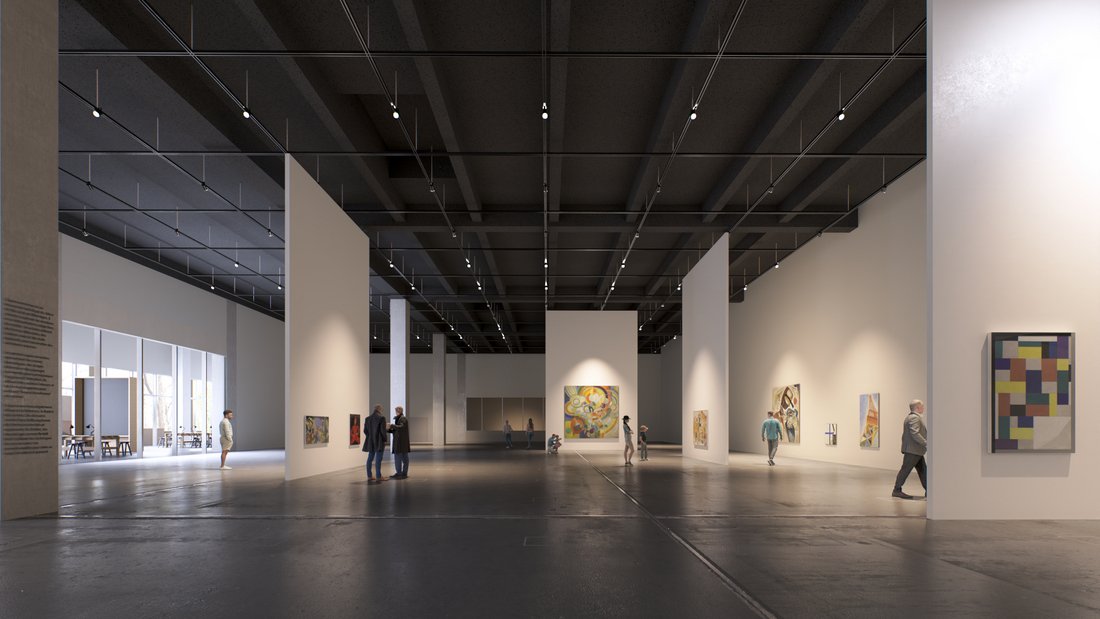
Each year, the building’s central exhibition space hosts two exhibitions drawn exclusively from Centre Pompidou collection. Exploring themes related to art history and contemporary artistic practice, these exhibitions invite visitors to experience artworks in new ways, revealing the context of their creation, their history, their materiality, and the decisions behind their acquisition or restoration.
Each exhibition is accompanied by a programme of performances, talks and events.
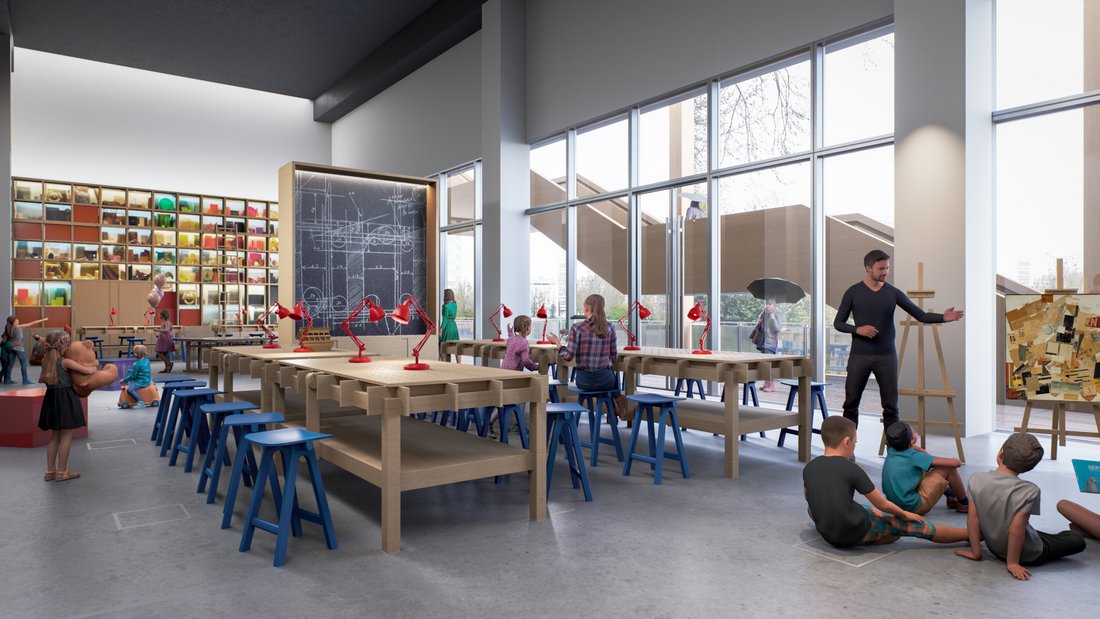
Educational activities are also centred around the exhibition space.
Surrounded by artworks, visitors are invited to take part in the art-making process through discussions with museum educators, hands-on workshops offering opportunities to explore the processes of artistic creation, conservation and restoration, and insights shared by artists, designers and researchers in residence at the Massy workshops.
Rooted in a dynamic cultural and scientific region
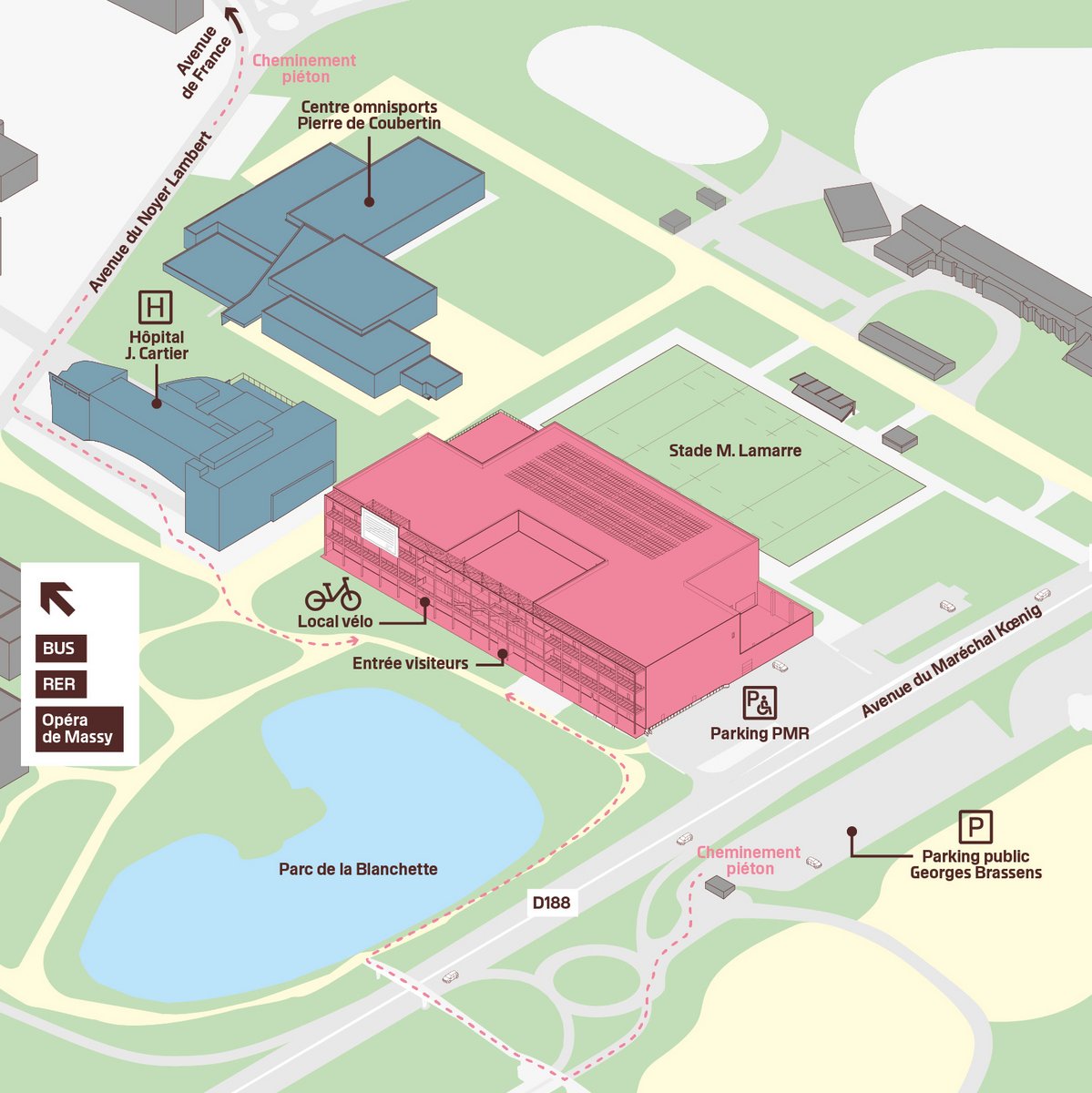
Located in Massy, in the Essonne department, south of Paris, the Centre Pompidou Francilien is becoming part of an area rich in urban, natural, historical, cultural and scientific resources, with a wealth of cultural facilities, heritage sites and contemporary art centres.
As early as 2019, the guiding principles of its cultural project were defined in dialogue with the local community. For more than five years, a preparatory programme has fostered experimental collaborations with local cultural organisations and helped engage audiences ahead of the opening of this new venue.
Scientific partnerships have also been established with universities and leading higher education institutions in the region, particularly the Paris-Saclay university, science and technology cluster, with the aim of creating a hub for researchers specialising in preventive conservation.
Interview with the Director, Alexia Fabre (in French)
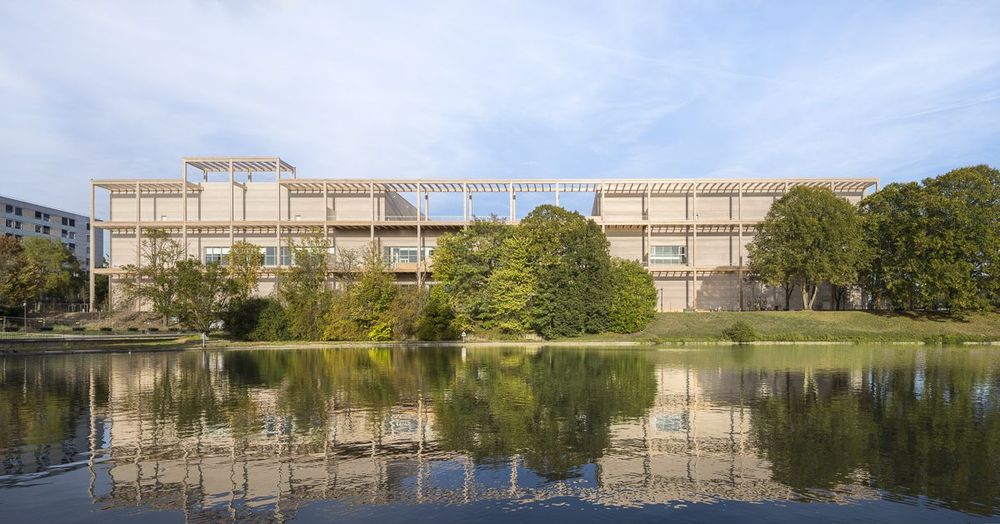
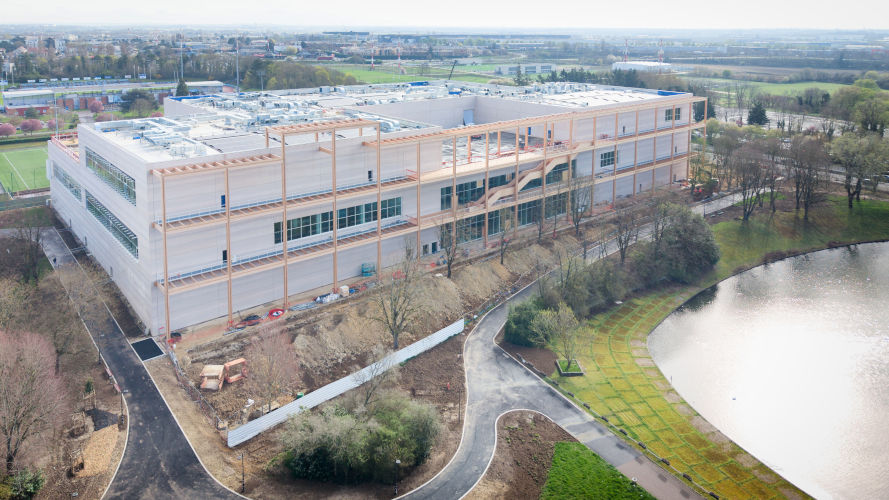
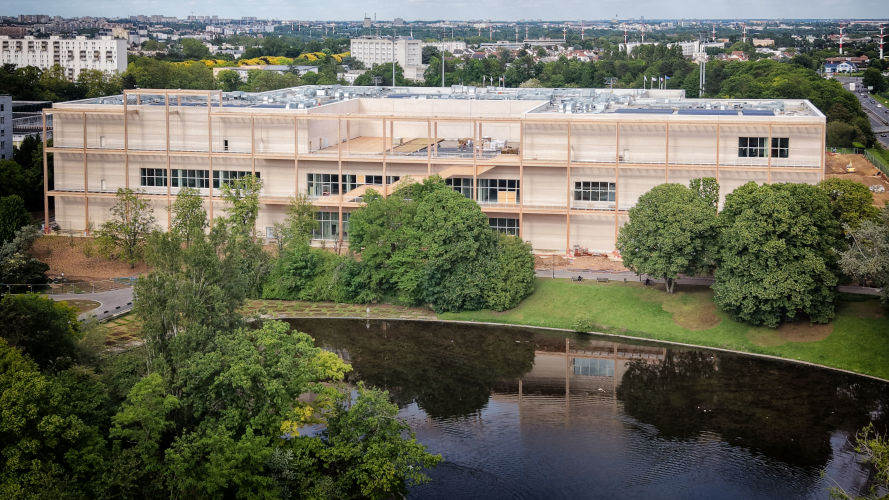
Designed by the Parisian agency PCA-STREAM Philippe Chiambaretta Architecte, Centre Pompidou Francilien – fabrique de l'art is a building with a dual character, expressing the paradox at the heart of its ambitious program.
- On one side, a vault, a closed monolith providing the best possible conditions for the conservation and restoration of the 150,000 works in Europe’s largest collection of modern and contemporary art, while allowing controlled natural light into the workshops;
- On the other, a welcoming and open profile, designed to bring together new audiences from Île-de-France around the collections and the museum’s professions, thus continuing the avant-garde philosophy of Renzo Piano and Richard Rogers’s project.
Two years of development in dialogue with museum teams enabled PCA-STREAM to design a rationalised and optimised facility, restrained and resilient, expressed in particular through:
- a structure made as compact as possible in order to reduce any unnecessary surface area;
- a bio-sourced, low-carbon timber exostructure;
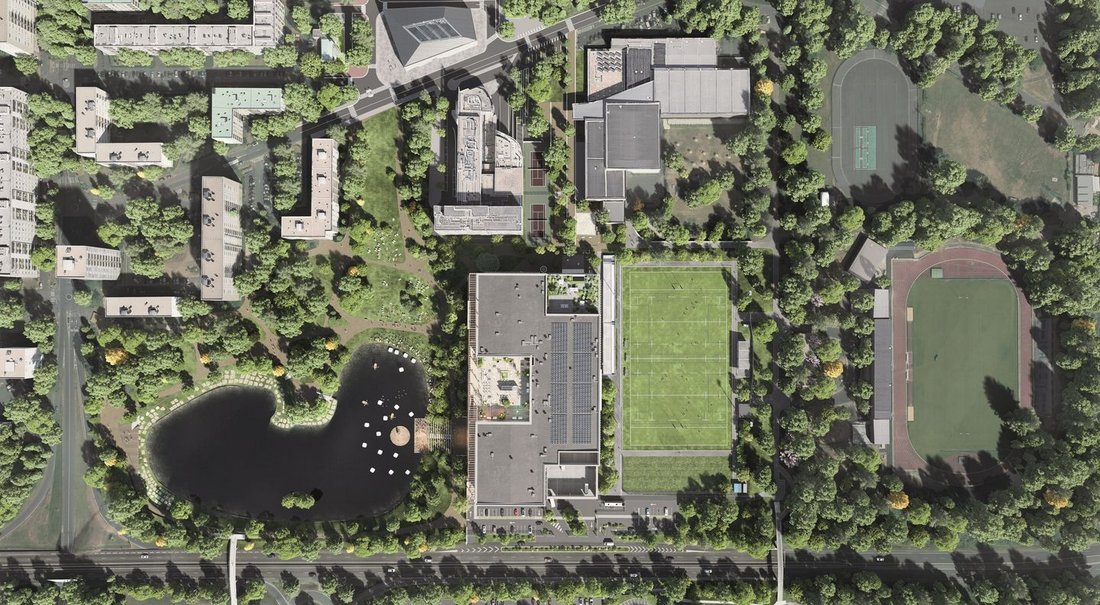
- a roof fitted with 1,500 photovoltaic panels, providing partial energy autonomy;
- a façade composed of a double skin of geological concrete and vertical fins across the glazed openings for passive thermal protection.
The whole is designed to ensure the best possible working conditions, facilitate circulation and foster synergies between teams.
A dialogue between nature and culture
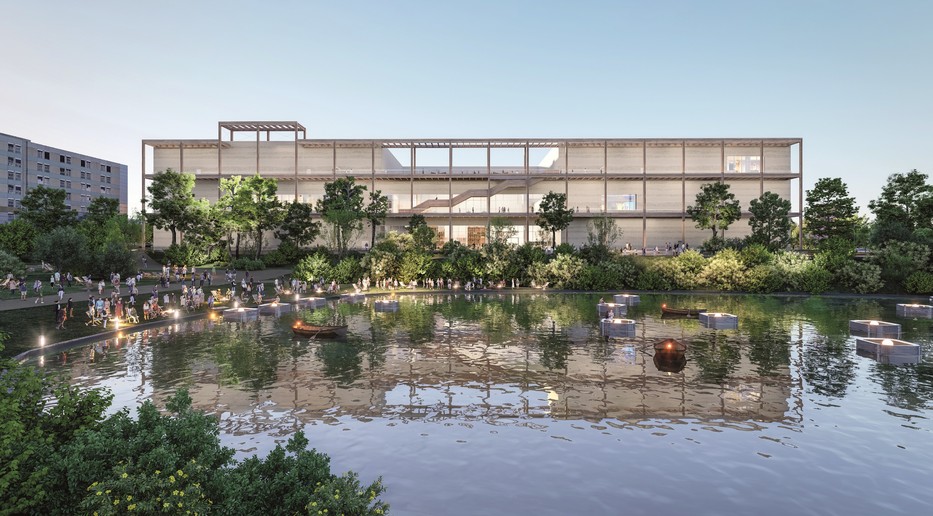
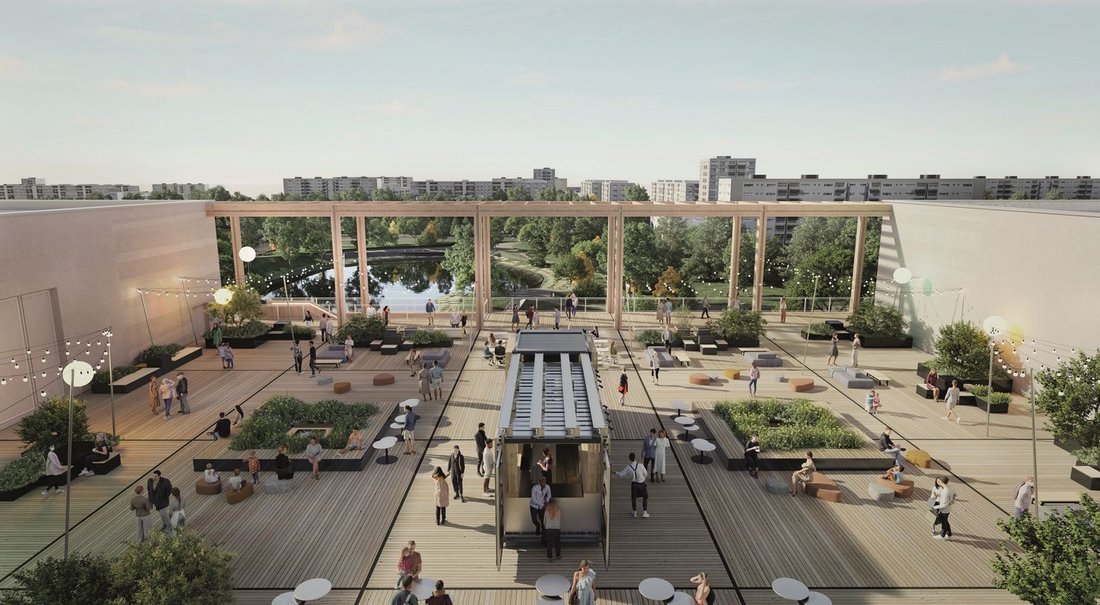
Just as Centre Pompidou opens onto the city through its Piazza, the Centre Pompidou Francilien extends towards the Parc de la Blanchette and its lake along a tree-lined promenade. The first-floor exhibitions spaces feature a wooden walkway offering views over the park. On the second floor, a spacious viewing terrace overlooking the treetops provides a setting for public events.
The grand wooden staircase running along the façade, connecting the walkway to the panoramic viewing terrace, evokes the Centre Pompidou’s iconic "caterpillar" escalator and reinforces the symbolic connection between the two sites.
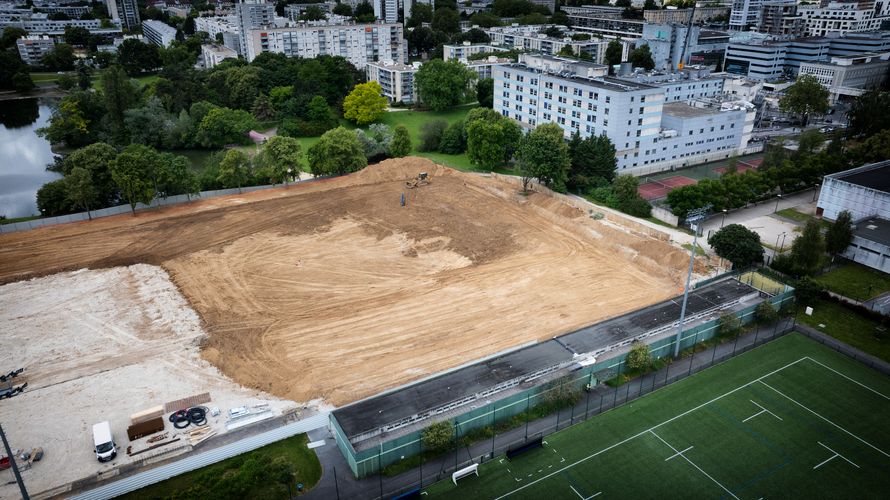
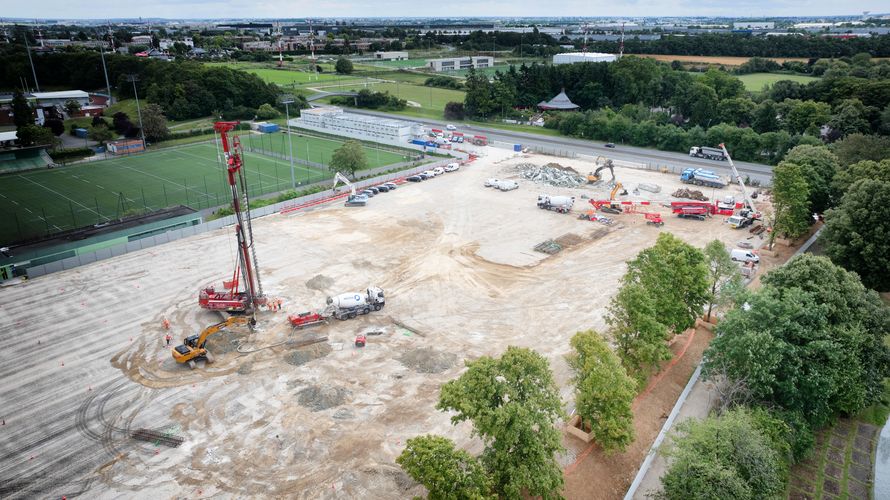
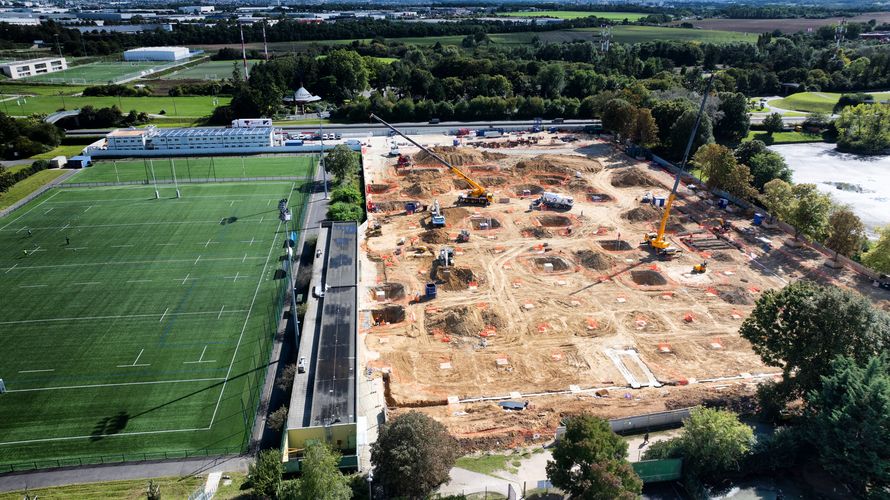
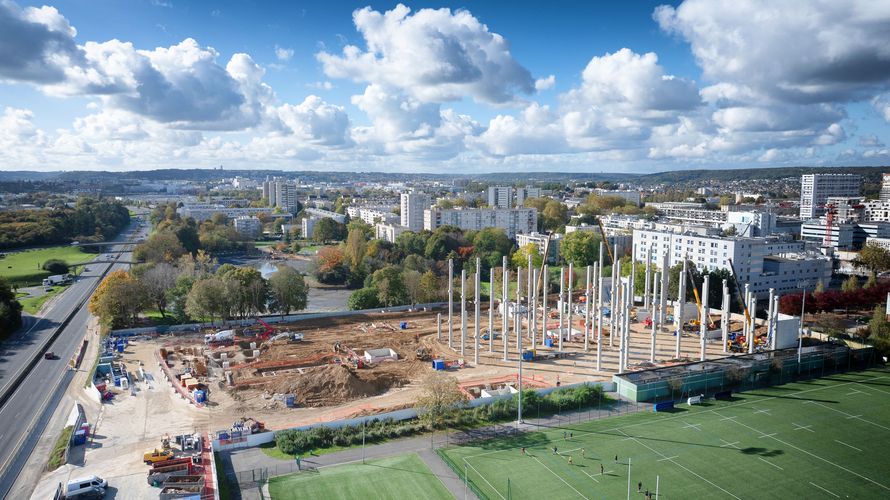
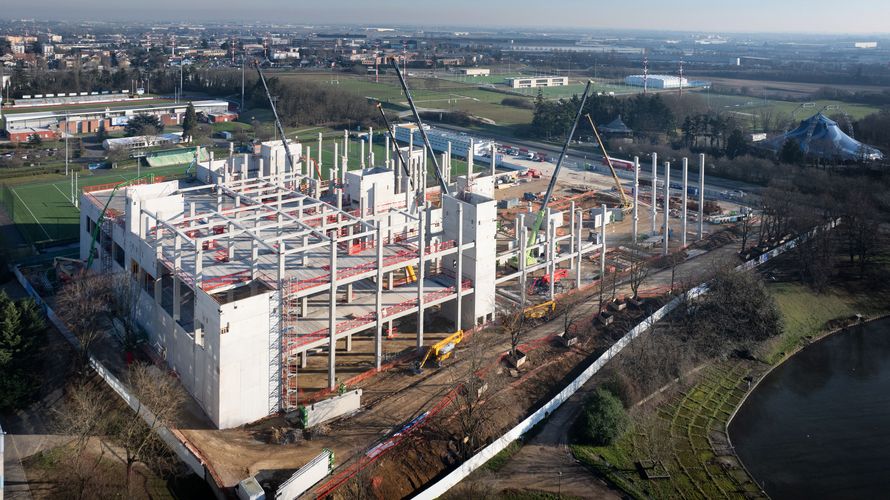
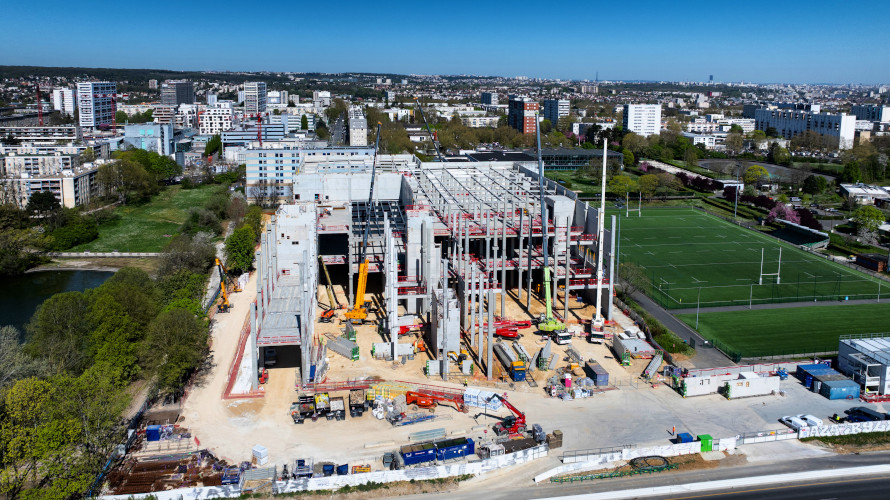
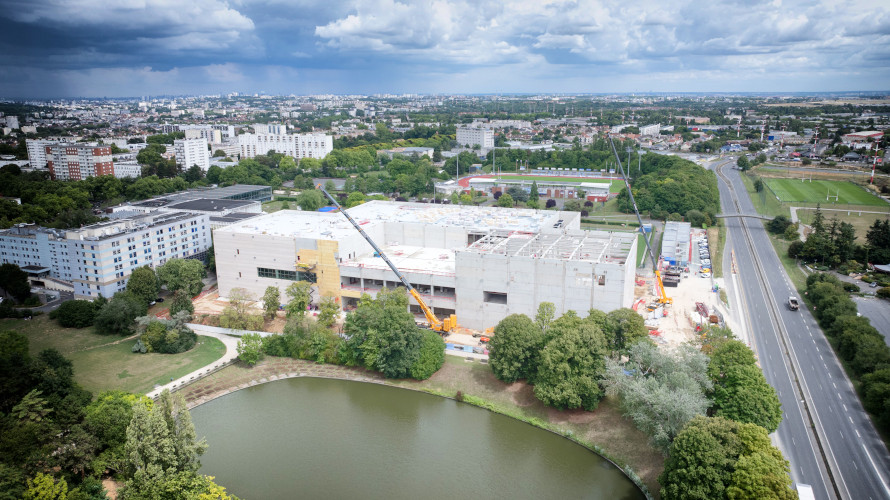
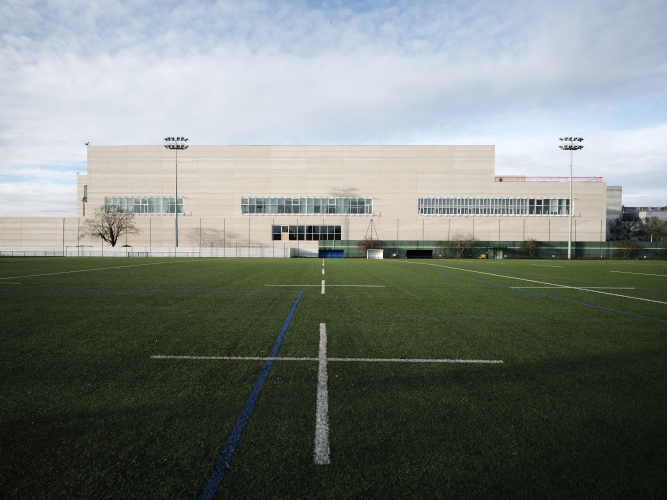
The Centre Pompidou Francilien – fabrique de l’art will open in Massy in spring 2027 with "150,000! La fabrique du musée" (The Making of a Museum), a major inaugural exhibition dedicated to Centre Pompidou collection.
This autumn, visitors will have an exclusive preview of the new venue during three special weekends entitled "Prélude!"
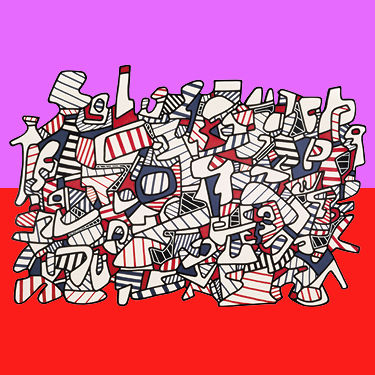
Prélude ! Three Discovery Weekends
17–18 October 2026
24–25 October 2026
31 October – 1st November 2026
Frre admission
For the first time, the Centre Pompidou Francilien – fabrique de l’art opens its doors to the public for “Prélude!”: three free weekends offering an exclusive preview of this new venue dedicated to art, ahead of its official opening in spring 2027.
Visitors can explore the building independently or on a guided tour, discovering its raw architectural spaces, designed by Philippe Chiambaretta and his team at PCA-STREAM, whose vision echoes the Centre Pompidou’s iconic Beaubourg building in Paris.
Works from the Centre Pompidou collection punctuate the route, while a programme of performances, talks, workshops, concerts and more brings the visit to life. These events explore three themes inspired by the construction and location of the Centre Pompidou Francilien: architecture; nature and the surrounding area; and collective experience.



The Île-de-France Region
"Cultural action in the region is deeply rooted in partnership. It occurs through collaboration with cities, departments and the national government. It covers all areas of culture: performing arts, heritage, cinema, audiovisual and video games, books and reading, sculpture, visual and digital arts, young artists and artistic and cultural education in all disciplines, particularly for secondary school pupils.
The aim of the Île-de-France Region is to promote culture for all throughout the local area. Our objectives are to rebalance the cultural offer in Île-de-France and fight against territorial divides, promote young creation and the emergence of new talents and provide access to high-quality cultural and artistic opportunities for residents on the outskirts – especially in rural areas – close to where they live.
Centre Pompidou Francilien – fabrique de l'Art, to which the Île-de-France Region is contributing €20 million, is part of our cultural strategy, summed up in three key words: inclusion, travelling and creation."
Valérie Pécresse, President of the Regional Council of Île-de-France
Florence Portelli, Vice-President for Culture, Heritage and Creation
The Essonne Department
"The Essonne Department is very proud to welcome one of the world's largest collections of modern and contemporary art to Massy. This will complement the already extensive range of artistic works on offer to the public in Essonne, thanks in particular to the Domaine de Chamarande and the Fonds Départemental d'Art Contemporain. From Dagobert to Racine, Boileau and Madame de Sévigné, not forgetting Gustave Caillebotte, Jean Cocteau and Hubert Robert, Essonne has seduced a great many artists and visitors since the Renaissance, with its rich cultural and natural heritage, offering a setting that is conducive to wonder and inspiration.
Centre Pompidou's future restoration and conservation centre will also offer international exhibitions and artistic performances in the Essonne region, stimulating creativity and synergy with local cultural structures. This is a huge opportunity for the cultural vitality of our department!"
François Durovray, Preident of the Departmental Council of Essonne
The Paris-Saclay Urban Authority
"Centre Pompidou Francilien in Massy – what an opportunity and honour for the Paris-Saclay Urban Community! The new centre to exhibit and conserve Centre Pompidou collection will strengthen the region's cultural offering and allow new audiences to discover contemporary art. It's also a chance to forge new partnerships with players in innovation and higher education!
Paris-Saclay locals can't wait to discover this new site, which will play a key role in the urban area's artistic ecosystem in the future, alongside the Opéra de Massy and the Théâtre de Longjumeau, which currently has the largest capacity of its kind in the outer suburbs."
Grégoire de Lasteyrie, President of the Paris-Saclay Urban Authority
The Town of Massy
"As the northern capital of Essonne and the urban centre of the Saclay plateau, with direct access from Orly, Massy is undeniably one of the central hubs that give structure to the Île-de-France region.
A city of culture (Opéra, Salle Paul B), a service centre (31,000 jobs, with major groups such as Carrefour and Nokia) and a place of innovation (quantum and deeptech start-ups), Massy is the model of the suburbs: a diverse, energetic and creative town. Dynamic and working-class (with 38% social housing), Massy is a town that encourages growth through its emphasis on education, its formative sports clubs and its debut album music festival. The arrival of Centre Pompidou Francilien in 2027 will consolidate its role as the southern capital of Greater Paris."
Nicolas Samsoen, Mayor of Massy
Paris-Saclay University
Paris-Saclay University is a leading university of Europe and the world, covering the fields of science and engineering, life sciences and health, and humanities and social sciences. It was created through the combined efforts of universities, Grandes Écoles and research bodies.
Its scientific policy closely links research and innovation, and focuses on both fundamental and applied sciences to respond to the major challenges facing society. From undergraduate to doctoral studies, as well as Grandes Écoles programs, Paris-Saclay University offers courses in a wide range of disciplines, designed to help students succeed and enter the professional world. It prepares graduates for a fast-changing society, where critical thinking, agility and the ability to renew your skills are key.