Céline Sciamma: “The museum is under renovation – so am I!”
From her first feature, Water Lilies (2007), adapted from the graduation screenplay she wrote at La Fémis, to her most recent film, Céline Sciamma has developed a cinematic language that places female, lesbian, and queer characters at its centre. With both sensitivity and rigour, she has brought their stories and lived experiences into view within French cinema through her own five feature films to date, as well as screenplays written for other filmmakers, including André Téchiné, Claude Barras, and Noémie Merlant.
Céline Sciamma has developed a cinematic language that places female, lesbian, and queer characters at its centre.
Over the years, Sciamma has forged a singular path of her own, now at a remove from the industry. From that position, she continues to make images on her own terms, to teach, and to reflect more deeply than ever on what cinema can do in a reality that is constantly being reshaped.
Beginning on 3 June, Céline Sciamma will be the guest of honour at a landmark retrospective at the Centre Pompidou. Throughout the programme, she will accompany screenings of all her films – including Tomboy and Girlhood, presented in previously unseen re-edited versions – premiere a new film in the Où en êtes-vous ? series, and take part in screenings alongside some of the artists closest to her, amongst them actor Adèle Haenel and filmmaker Cheryl Dunye. She will also deliver a new lecture on a transfeminist history of cinema. Interview*.
After several years away from the spotlight and working in a more discreet manner, what led you to accept the Centre Pompidou’s invitation now?
Céline Sciamma — These days, I do indeed work mostly out of sight, without a film project in the conventional sense of the term – that is, without a fiction feature being produced within the industry framework. Several years ago, I decided to take a break, so I now teach, mainly in film schools across Europe. At the same time, I make archives, create my own images, and spend time thinking.
From the perspective of my own personal ecology, this felt like the right moment to take stock of these years of reflection and practice. Much of my thinking has focused on cinema’s place within the broader history of art and within today’s cultural landscape. The museum is a space that draws me, and one in which, modestly, I feel this unfinished line of thought might open up a space of its own, might find a place.
So this invitation represents a broader retrospective movement, with a particular focus on the past five years, during which I have remained largely silent.
Until now, what has the Centre Pompidou represented for you?
CS — I’m almost exactly the same age as the Centre Pompidou! I was born at the same time as it was, 30 kilometres away. The Musée national d’art moderne that it houses is the museum I have visited more than any other in my life, especially as a child. Growing up in a suburb served by the RER, it was the first destination whenever we went “into Paris”. The museum is under renovation – so am I!
I’m almost exactly the same age as the Centre Pompidou! I was born at the same time as it was, 30 kilometres away. The Musée national d’art moderne that it houses is the museum I have visited more than any other in my life, especially as a child.
Céline Sciamma
More seriously, we are the same age, and both of us are in transition between two centuries. There is a kind of intimacy between me and this museum, an intimacy with its ideas. I became curious and looked into its earliest exhibitions, at the time of its opening. There is something very poetic about them. They explored, among other things, the place of children in public space, children in the city, and imagined railway stations as modern Towers of Babel.
I grew up in a ville nouvelle, and I still travel almost exclusively by train. These are all ideas inherited from the past, ideas that shaped us. What will become of them in the cultural moment we are living through today? To me, these questions are fundamental, and the museum continues to embody them – even in its absence.
For this occasion, you have made a new film, Tutti frutti, as part of the “Où en êtes-vous ?” series. Could you tell us about how it came about?
CS — Tutti frutti is made in an extremely straightforward and honest way. It follows, more or less chronologically, the images I have created on my own since acquiring my own camera, editing software, and music-composition tools four years ago – the same tools that have, more broadly, become widely accessible throughout society.
In that sense, the film also marks the end of a form of technical privilege from which I myself benefited.
The film was conceived for the museum, with complete freedom, all the more so because it was made on a very modest budget. That equation interests me. As it enters the museum, it brings certain images with it, certain companions, other artists. Through this journey across images, I explore what they have to say, the way editing brings them into harmony, and, ultimately, what they may reveal: limitations, possibilities, perhaps even a certain form of power.
It is, in a way, a solitary practice of cinema. I am discovering it myself as I go along, through the editing process, which is still ongoing. I am genuinely curious to see what the film will become in the end.
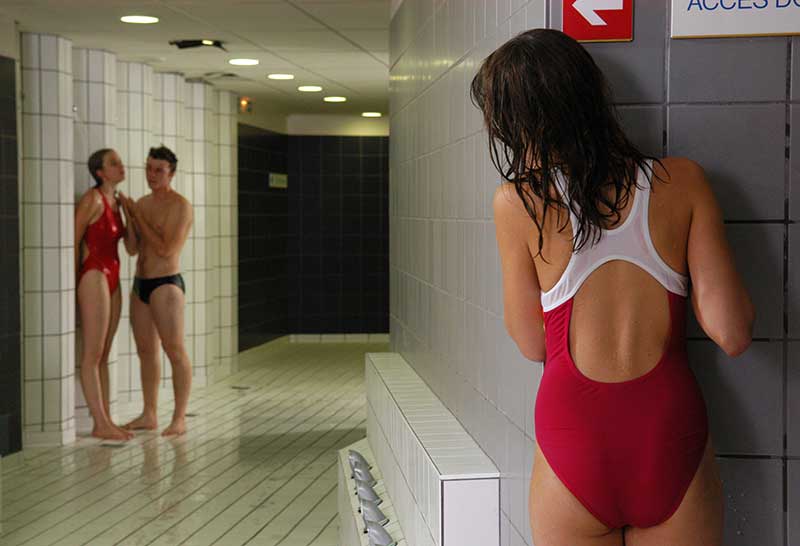
© Lilies Films
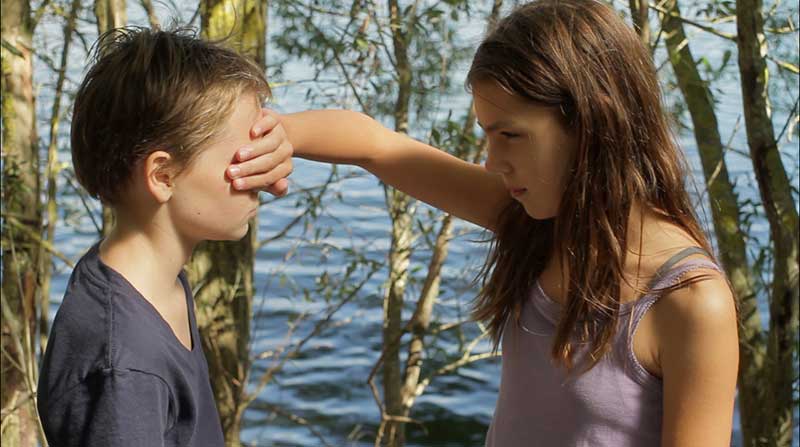
© Lilies Films
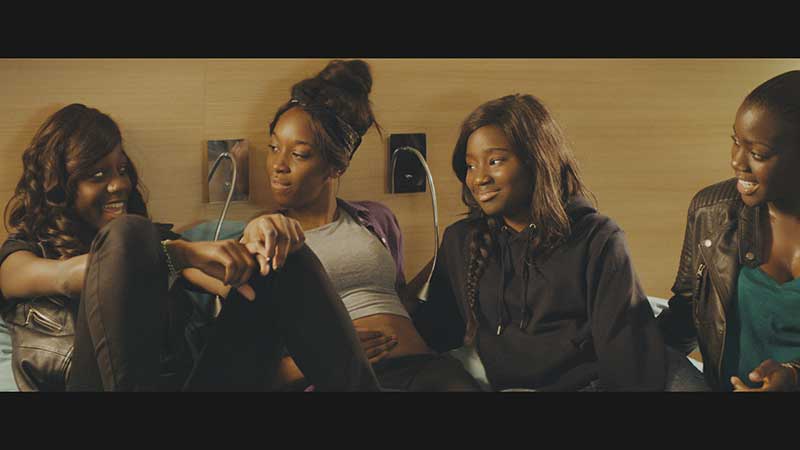
© Lilies Films
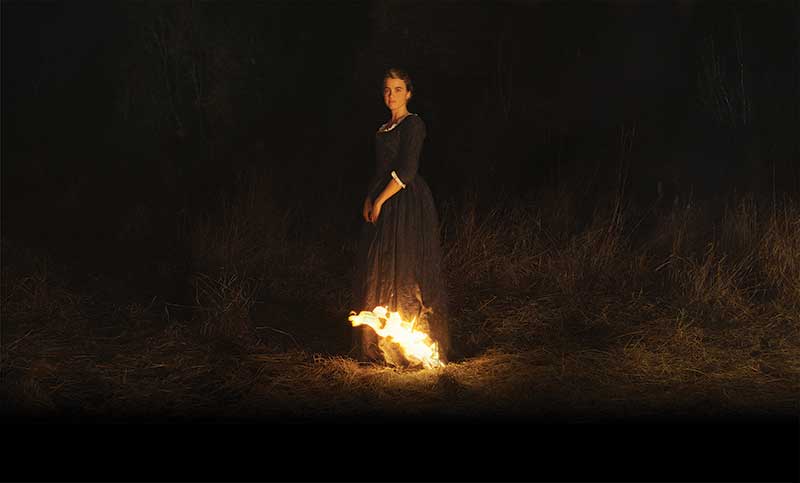
© Pyramide Distribution
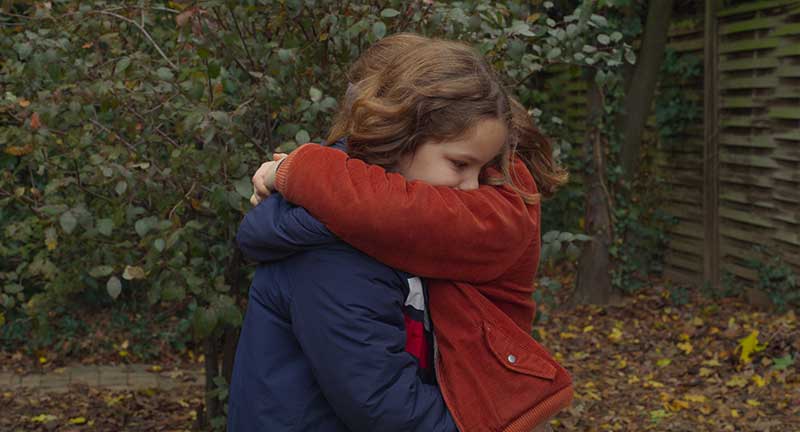
© Lilies Films
- pieuvres (copie 1)
- Tomboy (copie 1)
- bande (copie 1)
- portrait (copie 1)
- Petite Maman (copie 1)
You have also re-edited two of your films. What does that gesture mean to you?
CS — I re-edited Tomboy and Girlhood myself. Re-editing is a sacred act when undertaken by the author; it becomes sacrilegious when carried out by artificial intelligence, as is increasingly the case today.
As an intellectual gesture – one that engages with the plastic possibilities of cinema and the life of works over time – it strikes me as perfectly natural to contemplate, extremely simple to carry out, and, above all, deeply enjoyable. I did not add a single unused shot; I only took things away. In this new version, Tomboy is two and a half minutes shorter; Girlhood, 25 minutes shorter.
I re-edited Tomboy and Girlhood myself. Re-editing is a sacred act when undertaken by the author; it becomes sacrilegious when carried out by artificial intelligence.
Céline Sciamma
The two experiences were very different, but they were guided by a shared principle: removing elements with which I no longer agreed, things that had become uncomfortable for me, while taking into account the social impact of the films and the experiences shared by viewers. Both films emerged at the moment Twitter was taking off, when a kind of democratisation of criticism was taking place. Through that channel, I received many fascinating responses to these works, and I wanted to take them into account today.
Moreover, when I made Tomboy, I could never have imagined that it would one day become part of educational programmes. People who are 20 years old today tell me they saw it ten years ago and that it changed their lives. So my first gesture was to make it as compatible as possible with a young audience. Then I wanted to make it even more inclusive – perhaps more flexible, but, above all, more tender.
Girlhood, by contrast, engaged head-on with a very traditional mode of storytelling, drawing heavily on the conventions of genre cinema. As such, the film interacted with questions of violence, domestic violence, and delinquency – a cinematic language that I later shed entirely. Here, I carry that impulse through to its conclusion, and it is fascinating to see how differently the films breathe. It was something I had wanted to do for some time, and this invitation gave me the opportunity to finally make that gesture.
Between solitary practice, self-exposure, and a dialogue with a transfeminist history of cinema, what are you seeking to make visible – or to shift?
CS — The works that have moved me most deeply in recent years have come from the past. During this period in which I have not really been making films, one of my greatest pleasures has been programming the work of others and speaking about it.
Many of the answers to the questions I ask myself about cinema can be found in gestures that belong to an alternative history. That is the history I want to belong to. It deserves to be studied and invented, almost archaeologically, by digging things up, by making discoveries. Then it must be passed on. Which means knowing it and loving it. Many of the hopes I place in this language come precisely from this B-side of cinema, largely composed of successive avant-gardes. Those figures will, of course, be central to the lecture I will give on 13 June.
Many of the answers to the questions I ask myself about cinema can be found in gestures that belong to an alternative history. That is the history I want to belong to.
Céline Sciamma
My aim is to make this history of cinema intimate. In the realm of imagination, there are no firsts: everyone has already had the ideas, or would have had them. The challenge, then, is to allow images, ideas, artists and women technicians to hold hands across time. It will be a sensitive chronology, without winners – a gesture of montage that I am going to attempt: looking at these images together and seeing what they produce.
Beyond simply “making films”, how do you think about cinema’s powers – poetic, political, affective – and the forms that remain to be invented?
CS — I am tremendously hopeful, not least because cinema is still a young art form. Like all the people of the twentieth century, it has mostly known impersonal versions of itself, so it still has a great deal in reserve.
There is much left to discover about its potential, including its magical potential. Cinema could develop a more spiritual relationship to its own tools and to their effects. The democratisation of those tools now allows us to imagine approaches that are more Surrealist than naturalist. There is a whole territory of forms still waiting to be explored – less narrative forms, in particular – and I find that enormously exciting.
Poetry came up repeatedly in the preparation of this programme. What is your intuition about the relationship between poetry and cinema?
CS — When we speak of hope for this language, it is, of course, a poetic hope. Poetry is the offering of a sensory experience through language. It is a movement of the soul, one capable of reconciling vitality, feeling, and loss.
Because it travels through time, because it is itself a movement, cinema seems uniquely equipped to give form to a movement of the soul. Gilles Deleuze was saying something very similar when he spoke of cinema’s ability to dissociate image and sound. We then enter a realm of expanded temporalities and heightened sensations – a spiritual approach to cinema.
Because it travels through time, because it is itself a movement, cinema seems uniquely equipped to give form to a movement of the soul.
Céline Sciamma
As long as cinema remains primarily concerned with telling the stories of characters, this dimension will remain largely unexplored. Which is perfectly fine, by the way. Stories with characters are wonderful. But it is as though we were only allowed to dance to songs whose lyrics we listened to, when in fact music without words can move us profoundly. Where is cinema’s jazz? Cinema is only 120 years old. It is an art of musicality, and so it can draw nourishment from the questions raised by music and by poetry alike. That is why we approach both with humility and appetite. It could almost have been the title of this retrospective. ◼
Related articles
In the calendar
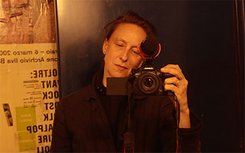
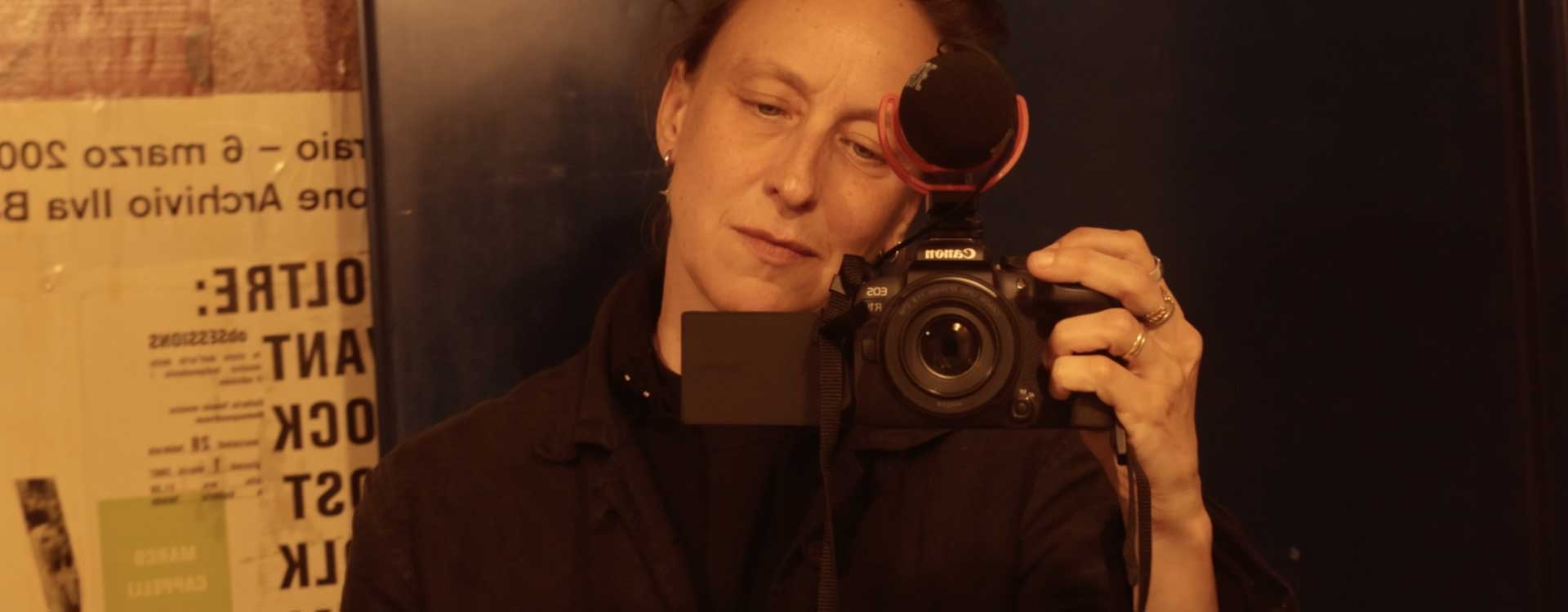
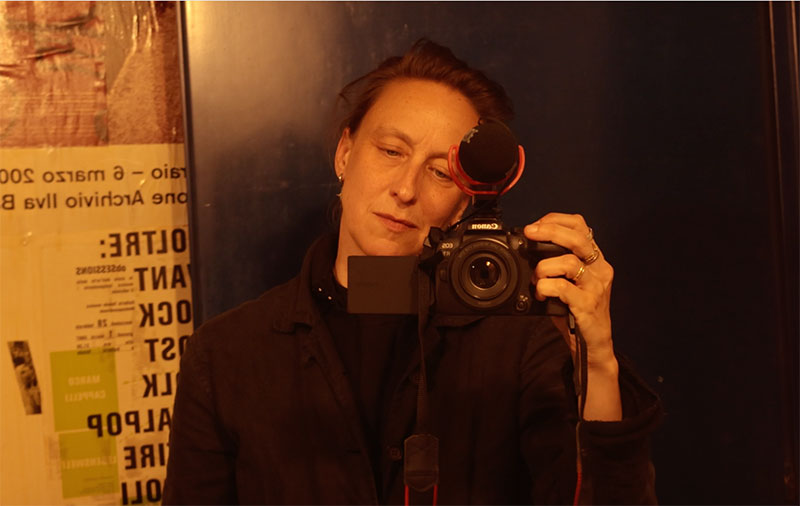
Self-portrait of filmmaker Céline Sciamma, 2026
© Céline Sciamma
* Interview conducted in Paris on 5 May 2026 by Amélie Galli, Jeanne Loubière and Louise Rinaldi.