Architectural Secrets ► Ircam, Music Underground
Originally, in the 1971 competition brief on which architects Renzo Piano and Richard Rogers worked, no space was allocated to what would become Ircam. The project would emerge from negotiations led by President Georges Pompidou, who sought to bring composer Pierre Boulez back to France after his self-imposed exile in Germany, following disputes with André Malraux, Minister of State for Cultural Affairs. In April 1965, Boulez had declared in the press: ‘I left Paris because, in terms of how musical life is organised, stupidity is more widespread there than anywhere else.’ So much for the mood.
As the selection process for the winning design unfolded, Boulez was brought into the loop, with the President promising him the means to create a musical research laboratory unlike any that existed at the time. This was the condition for persuading France’s most prominent modern composer to return to Paris (spoiler: it worked).
Ircam: music underground
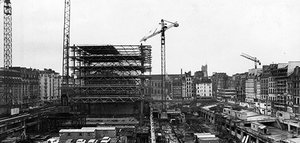
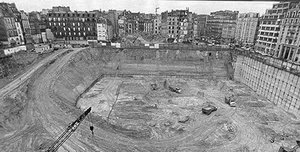
Several unworkable options were considered: dedicating a floor of the Centre to Ircam? A disaster acoustically. Placing Ircam beneath the Piazza? Not so simple. Boris Hamzeian, researcher and specialist in the history of the Centre Pompidou, recalls the dilemma faced by Renzo Piano and Richard Rogers: ‘It was almost a trap for the architects, since they had proposed a flexible, modular design. But by choosing to bury part of Ircam, the project became hypogeal.’ Meanwhile, Robert Bordaz, the official in charge of overseeing the construction of the Centre on the Beaubourg plateau, keen to preserve future views of the building, had an old municipal school demolished on the site of what is now Place Stravinsky. A solution began to take shape: the cleared space would provide an ideal location in which to excavate the first Ircam.
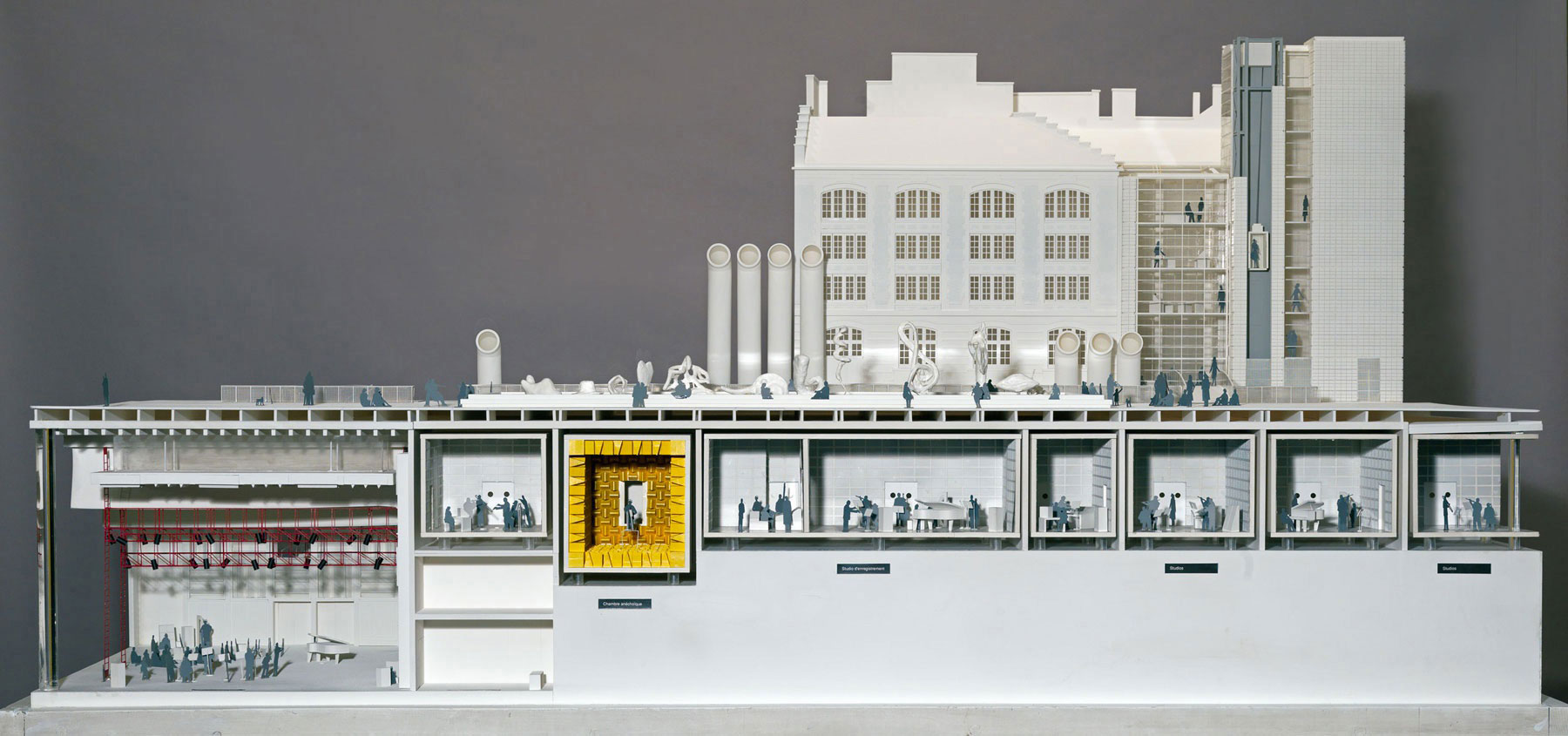
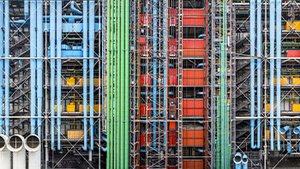
The first space delivered by the Piano + Rogers agency was entirely underground and completed in October 1978. Busy with the construction of the main building, Renzo Piano and Richard Rogers entrusted their collaborator Mike Davies with overseeing the project and adapting it to Pierre Boulez’s requirements – he would prove to be a demanding client. While the architecture does not exactly replicate that of the main building, certain family resemblances are evident: the descending staircase aligns with the Centre Pompidou’s ‘Chenille’, and one finds the same metal walkways, modular spaces and bold colours. The two institutions are also connected by an underground tunnel.
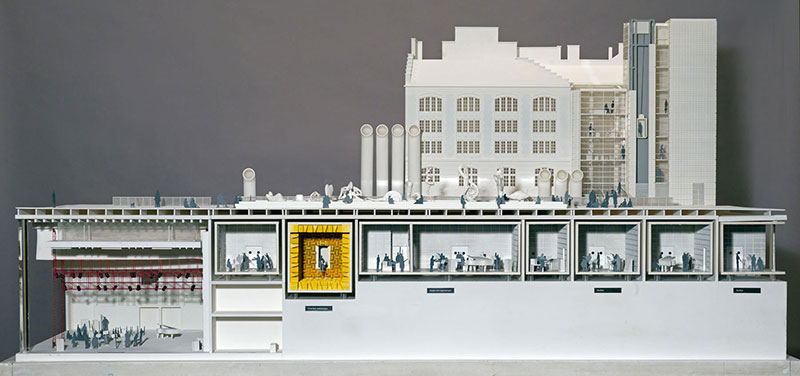
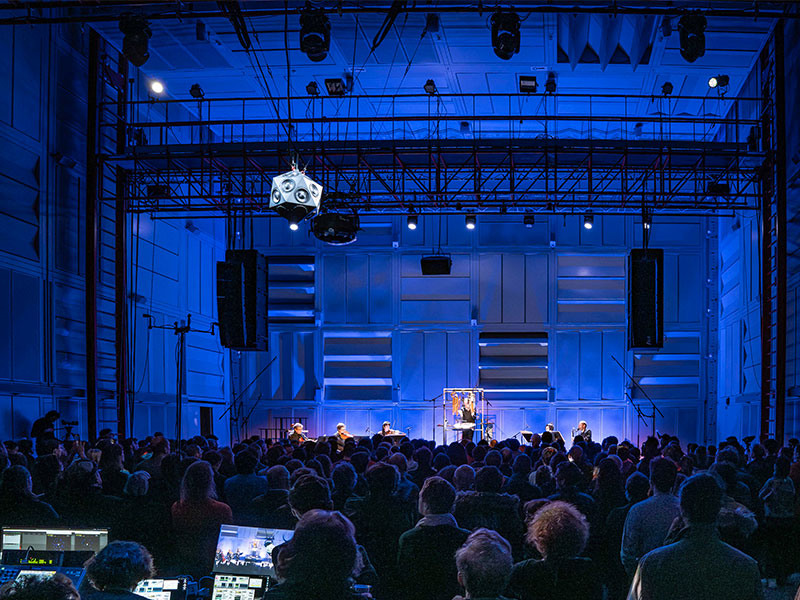
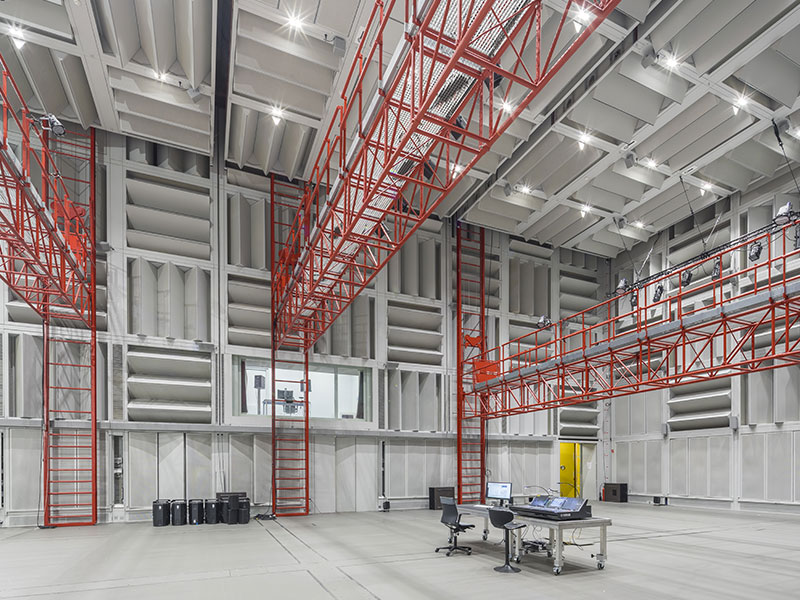
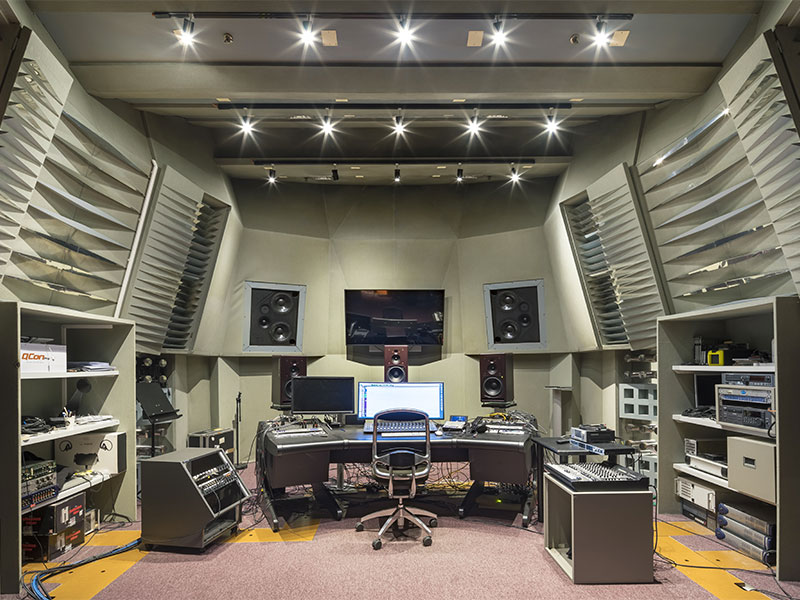
The complexity of this first underground Ircam lies in its hybrid nature: it had to accommodate both research infrastructure (studios, laboratories, offices and so on) and spaces open to the public. The Espace de projection (or ‘Espro’, if you want to sound like an insider) is the most emblematic example. This gigantic acoustic box, located 16 metres below ground, can reconfigure its internal volume and be used interchangeably for acoustic experiments or concerts.
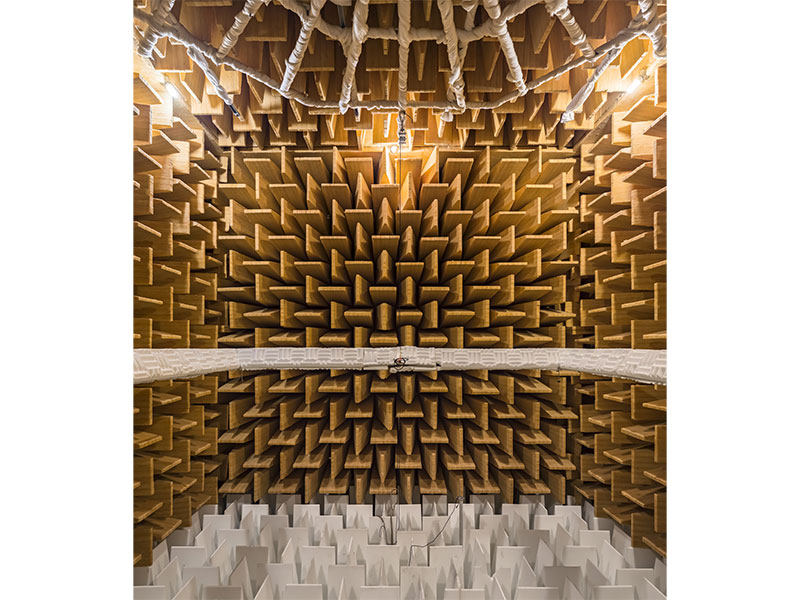
Living underground makes it possible to escape the noise of the city – despite one major drawback: every day, dozens of bewildered passers-by would walk down the steps expecting to find… a Paris Métro entrance. But once inside, an almost Olympic calm prevails, far removed from the urban din. Nowhere more so than in the famous anechoic chamber. This gigantic box on springs, isolated from the rest of the building and entirely lined with sound-absorbing materials, offers an experience of near-total silence. The residual noise level is just 15 decibels – and then there are the sounds produced by one’s own body. Stomach gurgles and heartbeats become as deafening as a metal concert.
The ‘Piano’ office tower, housing the institute’s administration, was added in June 1990 by Renzo Piano (this time working alone). It helped give the complex greater visibility: the Ircam iceberg finally acquired its visible tip and became more clearly identifiable within the Saint-Merri district.
Since then, the Institute has continued to expand. In 1996, the Canal agency (brothers Daniel and Patrick Rubin) converted the former Jules-Ferry library and the adjacent public bathhouse. Behind their municipal façades lie bright, playful interiors, now home to Ircam’s training and educational activities.
- 1 (copie 9)
- 2 (copie 10)
- 3 (copie 10)
- 4 (copie 7)
A sonic architecture
For several years now, François-Xavier Féron, a researcher at the CNRS and Ircam, has been leading Ramho, an oral history project devoted to the ‘Thirty Glorious Years’ of musical research in France. His work seeks to bring to light little-known pioneers – many of whom also collaborated with architects to shape Ircam’s very architecture. As he explains: ‘Alongside Pierre Boulez, there was a first generation that built Ircam – acousticians, researchers, musicians, composers – who were also the quiet architects of the building itself.’
Nothing was left to chance. In 1973, this team of young researchers in acoustics and contemporary music travelled the world, from Stockholm to New York, refining their specifications to create what would become the most innovative research laboratory of its kind. The organisation of the 3,500 square metres underground reflects an early commitment – dating back to the early 1970s – to computing. ‘Which was far from obvious at the time,’ notes François-Xavier Féron. All the studios were connected to a central ‘nodal space’ via information networks, which could also broadcast sound through all of Ircam’s loudspeakers. Several metres below ground, in the attentive ears of Ircam’s researchers, voices and synthesised sounds would resonate – spat out by the central computer after a night spent processing data.
Such was the extent of the collaboration with the Californians at the Center for Computer Research in Music and Acoustics (CCRMA) that Ircam earned the nickname ‘Stanford-on-the-Seine’. Its singular architecture and design remain a testament to the intellectual ferment of that first decade – and to an ideal of international collaboration. Music, as ever, softens everything. ◼
Discover Hugo Trutt’s urban architecture tours at https://croquebrique.com
Related articles
![[Translate to English:]](/fileadmin/_processed_/9/8/csm_chenille-vignette_braun_ccc5d5c183.jpg "[Translate to English:]")

Visual installation by artists AROTIN & SERGHEI on the façade of Ircam during the ManiFeste festival, 2021
© Ircam – Centre Pompidou
Photo © Quentin Chevrier
Model of Ircam
© Ircam / RPBW
Photo © Sergio Grazia