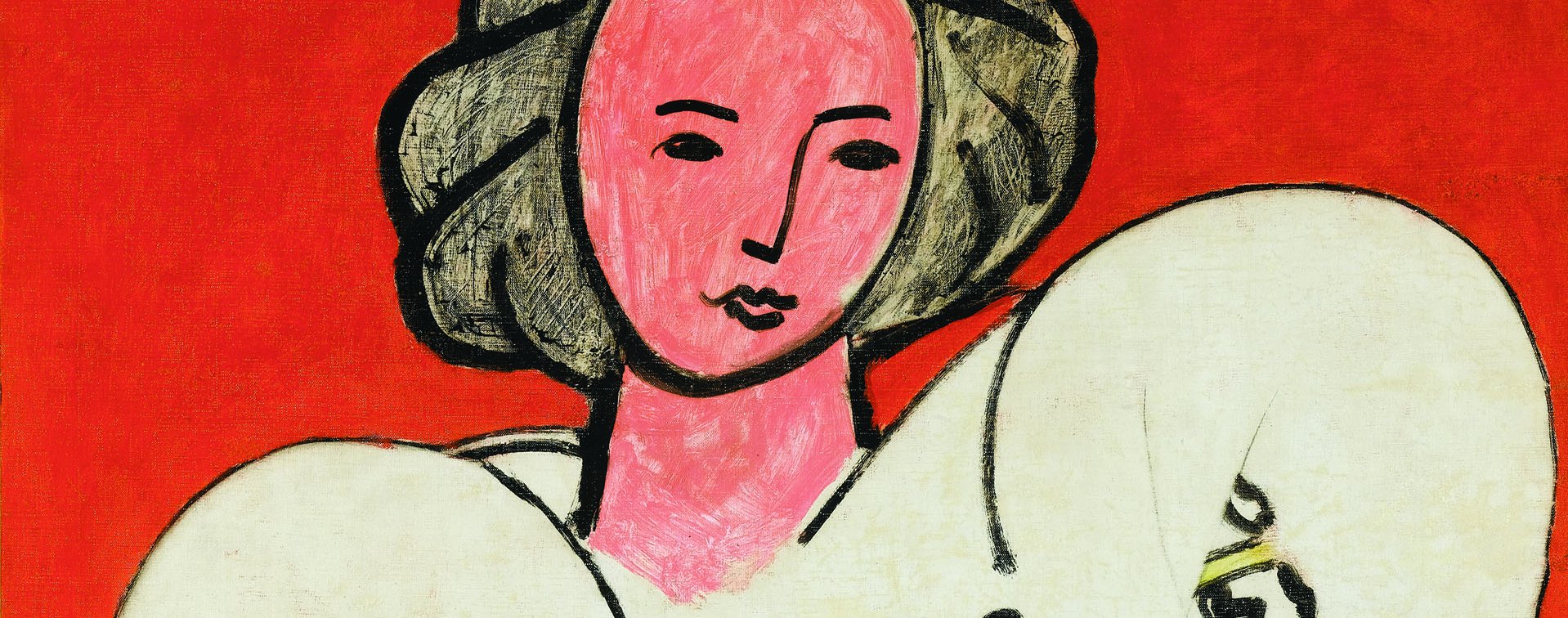
Focus on… “La Blouse roumaine” by Henri Matisse
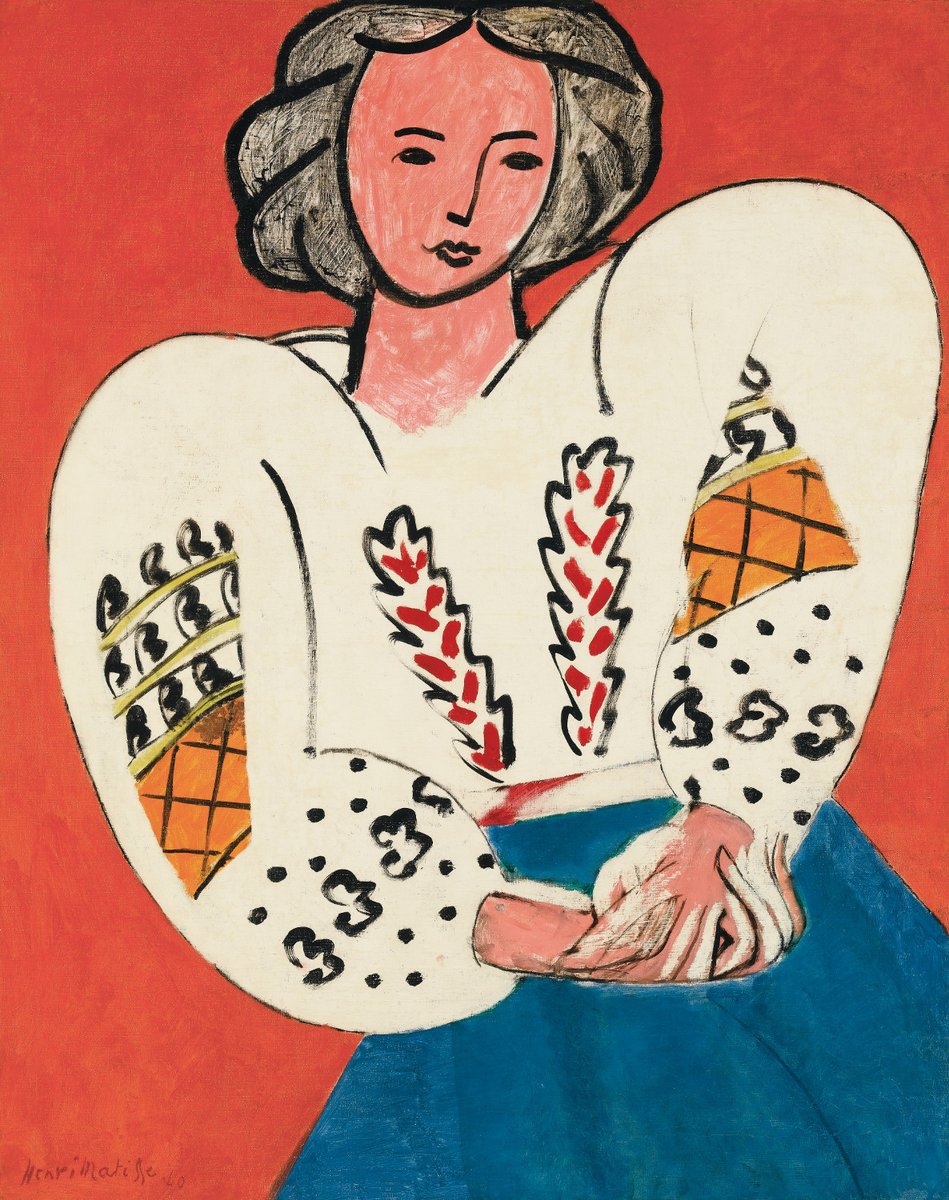
It sometimes takes time and patience to arrive at a simple result, or at a satisfying synthesis. La Blouse roumaine (The Romanian Blouse) is the fruit of six months of work and, more broadly, of decades of research by the greatest colourist of the twentieth century.
“What I am pursuing above all is expression,” Matisse writes in his Notes of a Painter. The phrase has since become famous. This foundational text, published in 1908 in La Grande Revue, was soon translated into Russian and German. Matisse, regarded as the leader of the Fauves, soon gained considerable influence. After causing a scandal a few years earlier at the Salon des Indépendants, he was now widely acclaimed. His collectors encouraged him to open an academy in Paris in order to transmit his art.
For Matisse, colour and composition are fundamental: they make possible the expression of feeling and the harmony of the painting. The place occupied by bodies on the canvas matters as much as the empty spaces surrounding them. Matisse advises seeking harmonies of colour and, above all, maintaining a clear conception of the whole. Over the decades, his desire to reconcile drawing and colour never left him, continually pushing his pictorial research further.
The long process of adjustment and recomposition behind each of Matisse’s paintings gave him the opportunity to experiment with various forms of “bricolage”: scraping, gouache experiments, cut-outs—techniques that began to acquire an autonomy of their own in the 1940s. “Cut paper allows me to draw in colour.”
The artist exhibited tapestry cartoons at the 1945 Salon d’Automne during his first official retrospective. He later published Jazz, a volume containing twenty pochoir plates whose forms were cut directly from gouache-painted papers, without any preliminary drawing. The series of gouache-painted cut-outs known as Blue Nudes (1952), along with The Swimming Pool, represents a colourful apotheosis and a remarkable synthesis of these experiments.
The major exhibition devoted to the cut-outs, inaugurated at Tate London in 2014 and then presented at the Museum of Modern Art in New York in 2015, attracted nearly one million visitors. ◼
Related articles

In the calendar
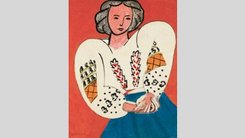
Henri Matisse, La Blouse roumaine, 1940
Huile sur toile, 92 × 73 cm
© Centre Pompidou / Dist. Rmn-Gp