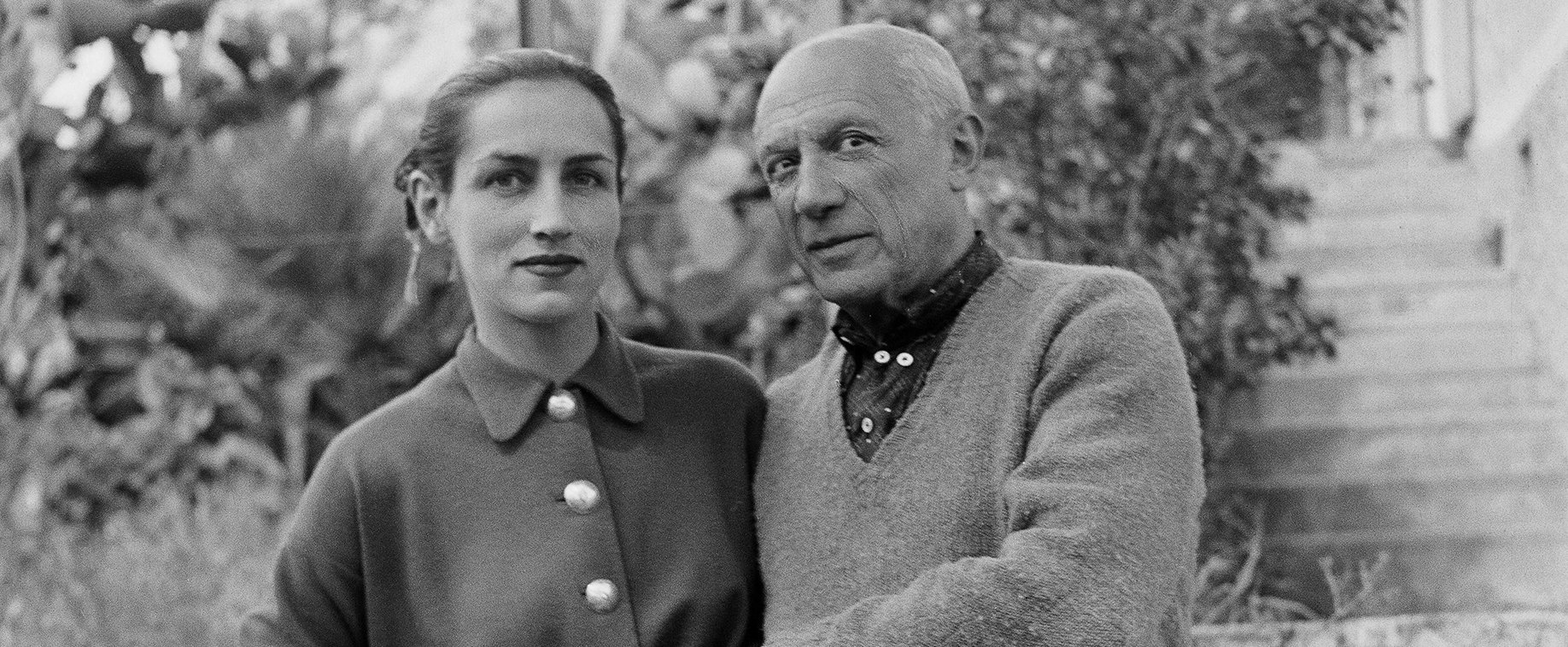
Françoise Gilot: The Woman Who Refused Picasso
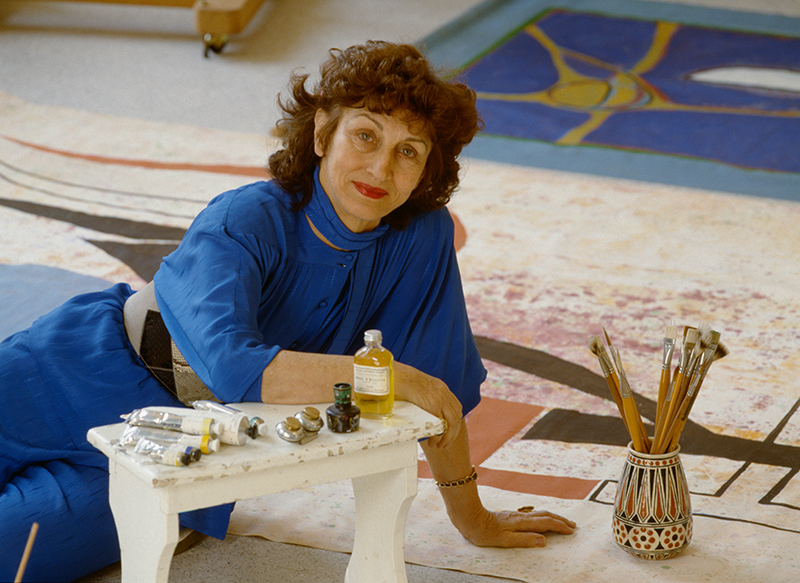
I scroll through photographs of her on my screen, lingering over the images, trying to catch her gaze. In the photographs from the "Picasso years", she exists only in black and white. Then, suddenly, colour bursts into view. There she is, standing before a canvas larger than herself, wearing a shimmering turquoise jumpsuit. A Klein blue jacket. A vivid red sweater. Gold earrings. Bright lipstick. She is fifty, sixty, seventy. One hundred. Radiant. Irrepressibly alive. She lived for more than a century. I hear my twelve-year-old daughter, watching a documentary beside me in which Gilot appears, impeccably dressed at the opening of an exhibition of her work in New York, saying: "I'd love to be like her when I'm that age—beautiful and brave."
Brave she certainly was.
Born in Neuilly-sur-Seine in 1921 to a bourgeois family, Françoise Gilot was just seven when her mother, herself a painter, introduced her to watercolour. She went on to study with the Franco-Hungarian Jewish artist Endre Rozsda, whose lessons came to an abrupt end in February 1943 when he fled the war. Her father strongly opposed her ambition to become an artist, steering her instead towards a degree in law. But once Françoise Gilot had set her mind on something, there was no changing it.
She wanted to paint.
In occupied Paris, she quickly abandoned her legal studies. Her father flew into a rage. Packing a few clothes into a suitcase, she left home for her beloved grandmother's. When he cut off her allowance, she simply found another way: teaching horse riding in the Bois de Boulogne to support herself while continuing her artistic training at the Académie Julian. She severed all ties with her father, knowing full well she would never see him again. Determination, courage, defiance—these were the qualities that defined Françoise Gilot long before she met the man who would change the course of her life.
Françoise Gilot was twenty-one when her path crossed that of Pablo Picasso. It was May 1943. One evening, she and a friend walked into a restaurant where Picasso was dining with Dora Maar, his companion at the time.
Beautiful she was, too. Soft features. Eyes that seem forever alight with curiosity. A gaze of remarkable depth. Thick hair, worn loose or swept into elegantly fashionable styles. Françoise Gilot was twenty-one when her path crossed that of Pablo Picasso. It was May 1943. One evening, she and a friend walked into a restaurant where Picasso was dining with Dora Maar, his companion at the time. He invited the young painter to visit his studio and see his work. She visited his studio on rue des Grands-Augustins once, then twice, then again. Picasso, in turn, attended her very first exhibition. They quickly forged a rich intellectual bond. He was exactly forty years her senior.
None of that mattered. She was drawn to him, and he was determined to win her over. But Françoise Gilot was not a woman easily won. Resolute and self-possessed, she never made decisions lightly. Rather than surrender to the intensity of their encounter, she chose to step away, giving herself time to think. Picasso pressed to see her again. She stood her ground. Patiently, she weighed her feelings. Then, one winter's day, she met him at his printer's workshop. He showed her his latest lithographs. Every one of them was a portrait of her. In an instant, Françoise became his muse, his favourite model, his inspiration.
But was that the role she wanted? What Françoise Gilot wanted, above all else, was to paint.
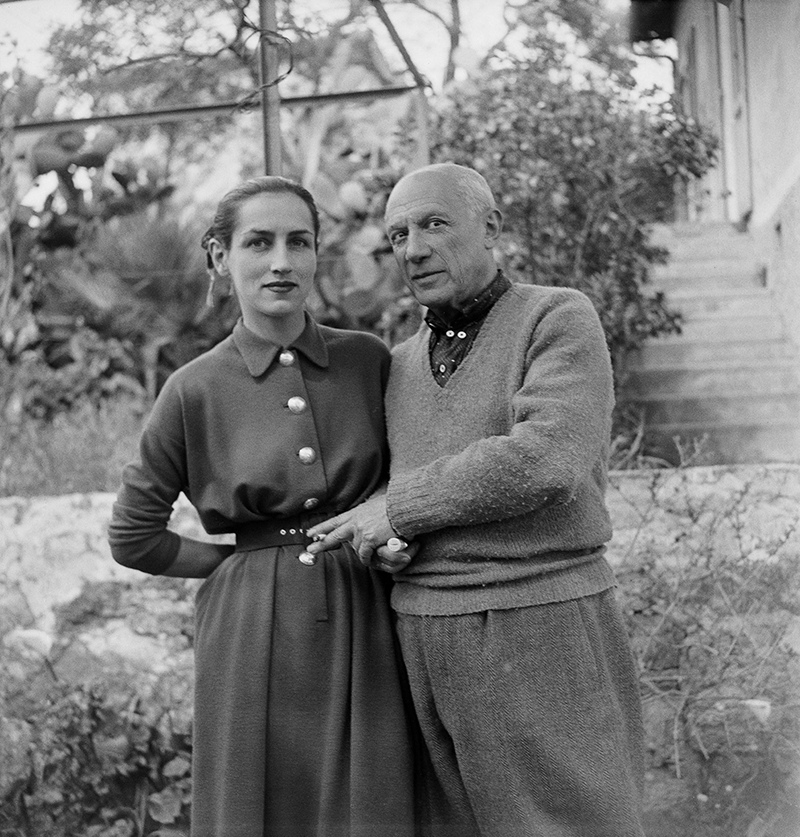
From that moment on, their lives became inseparable. Drawn irresistibly to the South of France, Picasso divided his time with Françoise between Paris and the Alpes-Maritimes, moving from one village to another. He introduced her to Henri Matisse, with whom she would go on to exchange letters and whose work would leave a lasting imprint on her own. Because, above all and always, what Françoise Gilot wanted was to paint. And paint she did, whenever she could.
It was no easy task. Living with Picasso meant accepting a life shaped by his needs and demands. Each morning began the same way: persuading him to get out of bed. Gilot recalled how he would wake in the darkest of moods, telling anyone who would listen that he could see no reason to endure another day. She would spend hours talking to him, comforting him, coaxing him, until he finally agreed to rise. Then there were the endless social obligations: entertaining the stream of visitors who appeared at the studio door, greeting art dealers eager to see his latest canvases, collectors hoping for a glimpse of new work. She copied his paintings—something she excelled at—answered journalists' questions, and even helped manage his accounts.
By the time Françoise met him, Picasso was at the height of his fame. Becoming his partner also meant becoming the woman beside the legend. He relied on her to take care of everyday life, to support him, to steady him. Picasso was a living god, a towering figure of modern art. No one imagined refusing him.
Picasso wanted her to become a mother. He insisted it mattered. Their son, Claude, was born in 1947, followed two years later by their daughter, Paloma. He hoped for a third child. Françoise refused. Two was enough.
Daily life grew ever more demanding. In the early mornings, she would steal a few precious hours to paint while the house was still asleep, or with her young children playing at her feet in the studio. Then came Picasso's now-familiar morning ritual, made all the more taxing as the years passed and his dark moods on waking deepened.
Yet Françoise persisted. Despite the demands of motherhood, despite her partner's volatile temperament, despite the countless practical burdens of everyday life, she never stopped painting. Daniel-Henry Kahnweiler, Picasso's longtime dealer, offered to exhibit her work in Paris. Soon she was signing contracts with galleries in London and New York. At last, she could breathe again.
Picasso often told her, "You don't leave a man like me." But Françoise Gilot did exactly that. Taking their two children with her, she left behind the gentle warmth of the South and returned to Paris.
And yet, one day, she had had enough. She left. She broke free.
Picasso often told her, "You don't leave a man like me." But Françoise Gilot did exactly that. Taking their two children with her, she left behind the gentle warmth of the South and returned to Paris. Later, she learned that, in a fit of rage, Picasso had thrown away everything she had left behind when he emptied the house they had shared in Vallauris: her belongings, her books, her paintings—even the letters she had treasured from Henri Matisse.
Still, she refused to look back. She kept moving forward, carrying within her an impossible paradox: the same hand that creates is also capable of destroying. The same hand revered around the world, celebrated as one of the greatest in the history of art, was the hand that erased the traces of her life.
How do you make sense of that? How do you come to terms with it?
So Françoise Gilot decided to tell her story. The whole story. How she met Pablo Picasso. What it meant to live alongside him—not only the artist, but the man. She claimed her voice. Boldly. Defiantly. Years ahead of her time. And she never looked back.
In 1964, she published Life with Picasso, written with the American critic Carlton Lake. At last, she had a space in which to speak freely. She wrote about the conversations on art that kept them talking late into the night. About the pictorial dialogue that unfolded between their canvases, each painting answering the other. About the exhilaration of those years. About why she stayed for a decade: out of admiration, out of love, and out of defiance.
But she also wrote about Picasso's hold over those around him. About the mercurial moods of a deeply troubled man. About his possessiveness and his need to control. About his inability to tolerate the freedom she prized above all else.
The book became a place where her own voice could finally be heard.
In 1964, she published Life with Picasso, written with the American critic Carlton Lake. At last, she had a space in which to speak freely.
Having been painted by Picasso time and again, Françoise Gilot eventually turned the question back on herself: how do you portray another person? How do you capture a presence? At the same time, she asserted that she had done far more than accompany the destiny of a great painter. She was carving out her own path—that of a woman artist navigating the twentieth century, fiercely protective of her independence.
Once again, Picasso refused to let her have a space of her own. Three times, he tried to have Life with Picasso banned. Three times, he failed. Instead, he published a petition in Les Lettres françaises, signed by many leading cultural figures, including several of their mutual friends—Jacques Prévert, Louis Aragon, Joan Miró and René Char among them.
For speaking out, for telling her story, Gilot paid a heavy price. She was publicly denounced and rejected by people she had once counted among her closest friends. Undeterred, she moved to the United States, where she built a distinguished career. She married. Became the mother of another child. Married again. And, above all, she never stopped painting.
Françoise Gilot was far more than the woman who said no to Pablo Picasso—the only one of his many partners to leave him. Far more than a muse. Far more than the flower-like figure who inhabits so many of his lush, exuberant drawings.
Françoise Gilot was far more than the woman who said no to Pablo Picasso—the only one of his many partners to leave him. Far more than a muse. Far more than the flower-like figure who inhabits so many of his lush, exuberant drawings.
Her omnipresence in Picasso's work can easily eclipse the fact that she was an artist in her own right. The very abundance of her image on his pages has too often come at the cost of her own visibility as a painter. But Françoise Gilot refused to be consumed. She refused to remain captive beneath the master's hand, to exist only as the model endlessly sketched by the mythical figure of artistic genius.
She was a major artist. An independent woman whom the history of art ultimately failed to erase. A feminist. Uncompromisingly free.
In the end, there is only one way to resist oblivion, to outlast erasure: to keep creating.
Françoise Gilot painted until the very end of her life, leaving behind more than 1,600 paintings and nearly 3,500 drawings.
She is still here. Her work is still here.
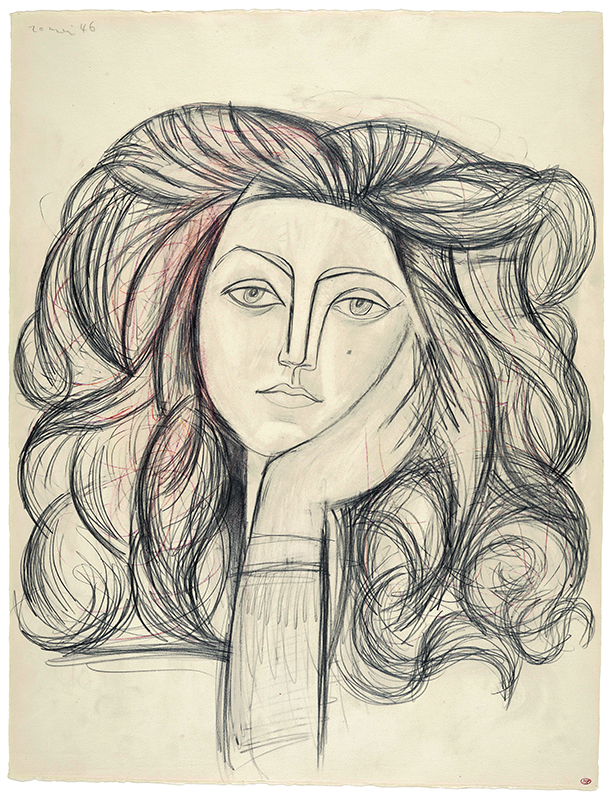
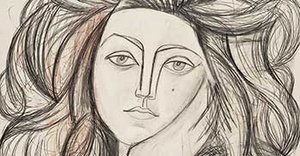
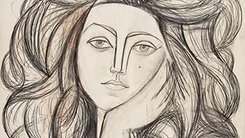
On the exhibition poster, the words Picasso. Dessiner à l'infini appear above a portrait of Françoise Gilot, drawn by Picasso in May 1946. In Life with Picasso, she recalls an argument a few months earlier. Enraged, he pressed the lit end of a cigarette against her cheek. She did not cry out. She did not weep. She did not even flinch. Nor did she turn her face away. The burn left a scar she carried for the rest of her life.
On the exhibition poster, a small black mark appears on Françoise's cheek. A beauty spot? A scar? The ambiguity remains. But we know.
The trace left on her skin has been preserved for posterity. I look at her. She is held within the artist's gaze—but she is not trapped by it. She looks back at me. In a filmed interview, I hear her say: "Picasso did not destroy me. I always kept my own identity."
Françoise Gilot died in 2023 at the age of 101. My daughter turns to me and asks, "Why isn't there an exhibition of her paintings?" Why indeed.
And yet, we remember her. ◼
* Latest publication: Qui sait, Gallimard, 2022.
Related articles
In the calendar
Françoise Gilot and Pablo Picasso, c. 1952
Photo © Boris Lipnitzki / Roger-Viollet
Pablo Picasso, Portrait de Françoise, Paris, 20 May 1946
Musée national Picasso-Paris, Pablo Picasso Acceptance in Lieu, 1979
© Succession Picasso 2023 © Photo RMN-Grand Palais (Musée national Picasso-Paris) / Mathieu Rabeau
Françoise Gilot and Pablo Picasso in the South of France, c. 1952
Photo © Boris Lipnitzki / Roger-Viollet
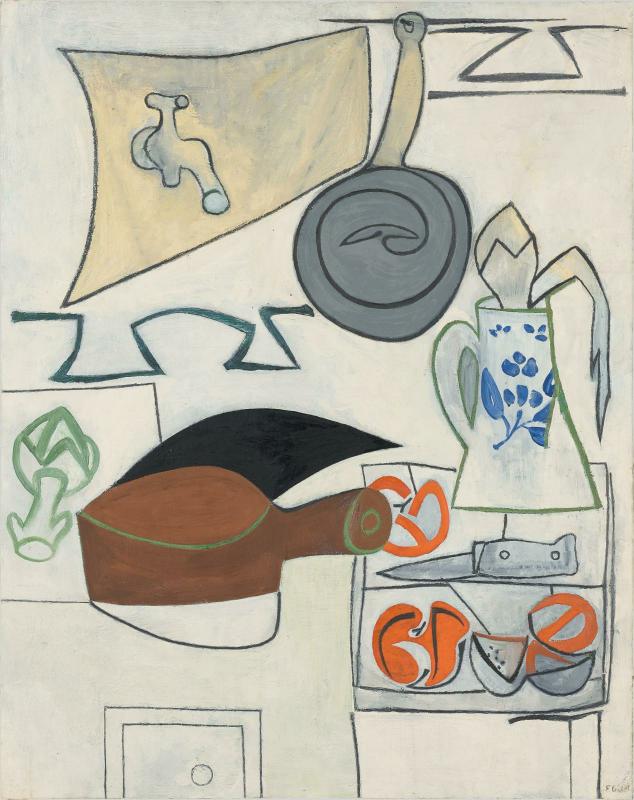
Françoise Gilot (born Françoise Gilot-Simon), Sink and Tomatoes, May 1951
Oil on plywood, 91.8 × 72.8 cm
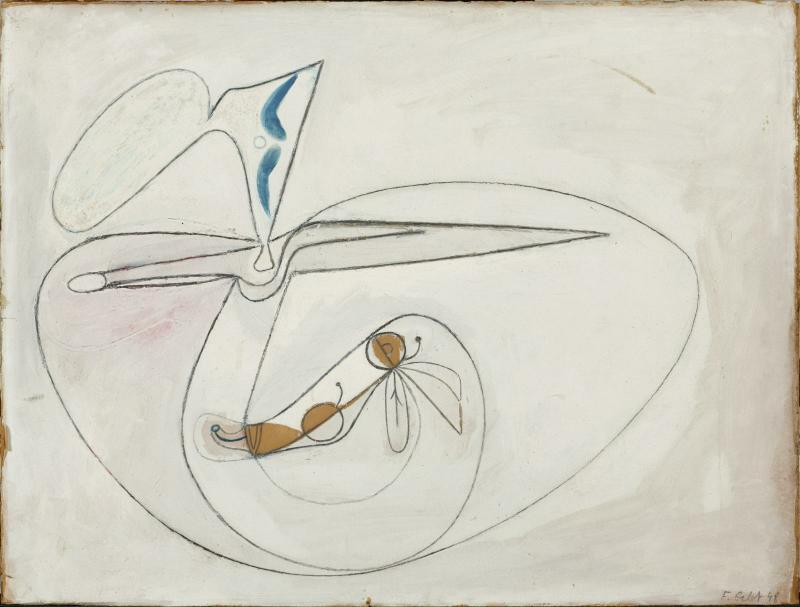
Françoise Gilot (born Françoise Gilot-Simon), Dish of Cherries and Spanish Knife, 1948
Gouache, pencil, charcoal and coloured pencil on cardboard, 49.5 × 67 cm
© Françoise Gilot
© Centre Pompidou
Françoise Gilot in her Paris studio, 1988
Photo © Julio Donoso / Sygma via Getty Images