Hilma af Klint: The Unsung Pioneer of Abstraction
Luminous colours, abstract forms that at times hint at plant life, geometric compositions, hidden symbolism, a cosmic air – nothing in these works suggests that they were conceived between 1906 and 1915. Undeniably magnetic, these large-scale paintings are surrounded by an aura of mystery that seems to arise from the keen intuition of an artist as gifted technically as she was spiritually. Executed for the most part in tempera – a technique inherited from the Italian Renaissance, combining pure pigment with egg white – the works of Hilma af Klint (1862–1944) reveal a painterly mastery that lends them their striking luminosity. At once material and immaterial, monumental in scale yet inward in force, they offer the viewer a sense of transcendence.
While art history textbooks typically date the birth of abstraction to between 1910 and 1913, crediting its earliest manifestations to Wassily Kandinsky, it was in fact as early as 1906 that Hilma af Klint – then 44, working quietly in her Stockholm studio and deeply engaged with esotericism – embarked on an ambitious series of cosmic paintings intended for a temple of the future.
While art history textbooks typically date the birth of abstraction to between 1910 and 1913, crediting its earliest manifestations to Wassily Kandinsky, it was in fact as early as 1906 that Hilma af Klint – then 44, working quietly in her Stockholm studio and deeply engaged with esotericism – embarked on an ambitious series of cosmic paintings intended for a temple of the future.
As recent years have brought renewed attention to the place of women artists within the history of art, Hilma af Klint has emerged as one of abstraction’s major pioneers, predating Kandinsky’s first abstract work by several years. Yet she did not achieve full recognition until 2018, when her first retrospective opened at the Solomon R. Guggenheim Museum in New York. A resounding success, the exhibition propelled her decisively onto the international stage.
Courtesy of the Hilma af Klint Foundation
Photo © Moderna Museet, Stockholm
Courtesy of the Hilma af Klint Foundation
Photo © Moderna Museet, Stockholm
Courtesy of the Hilma af Klint Foundation
Photo © Moderna Museet, Stockholm
Courtesy of the Hilma af Klint Foundation
Photo © Moderna Museet, Stockholm
Courtesy of the Hilma af Klint Foundation
Photo © Moderna Museet, Stockholm
Courtesy of the Hilma af Klint Foundation
Photo © Moderna Museet, Stockholm
- retable (copie 1)
- figurative 4 (copie 1)
- US 5 (copie 1)
- cygnes (copie 1)
- colombe (copie 1)
- colombe 2 (copie 1)
A Near-Miraculous Rediscovery
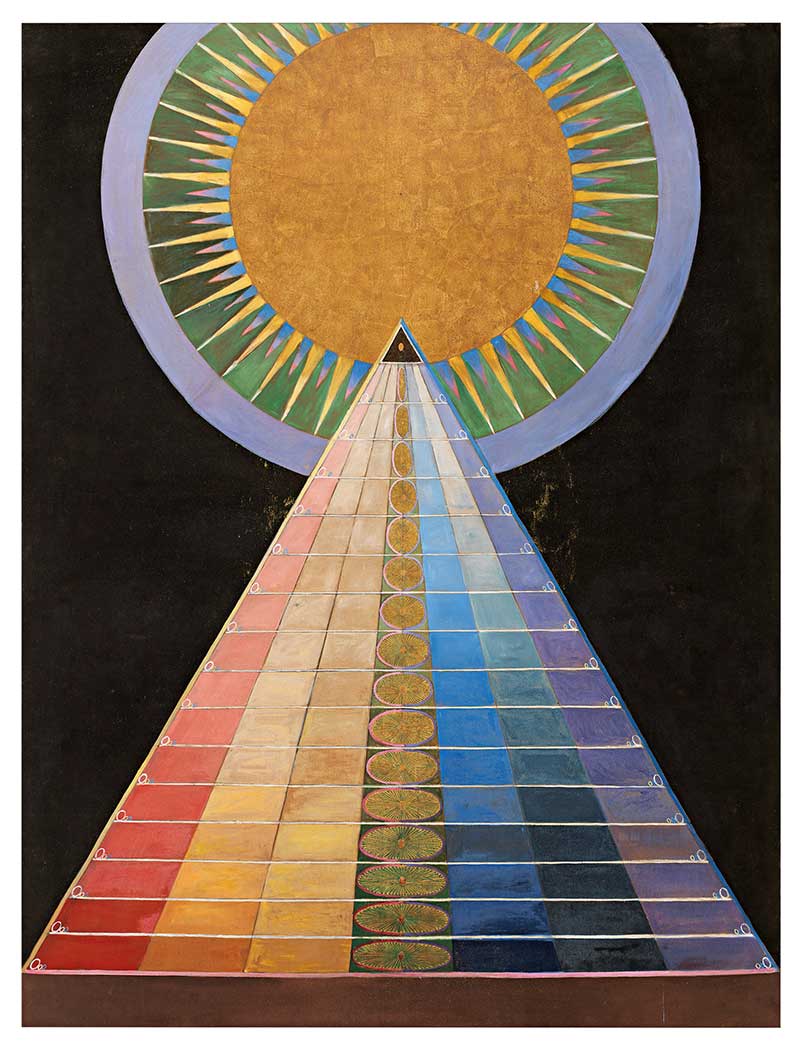
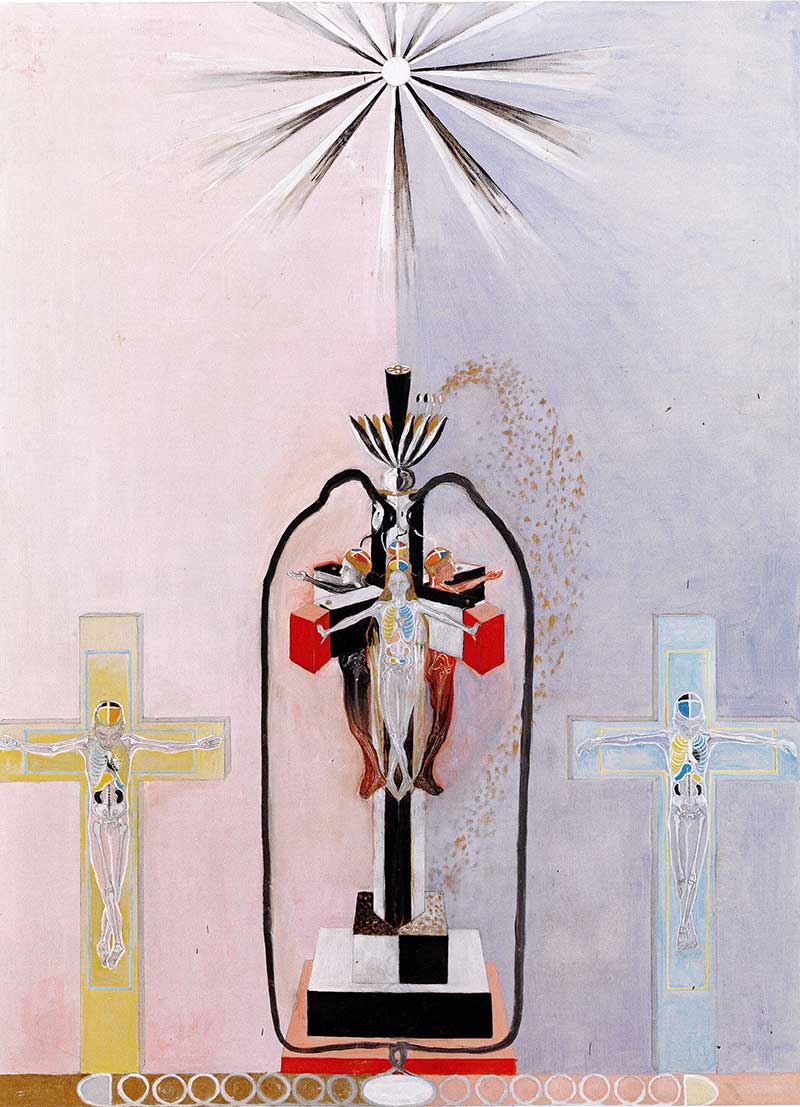
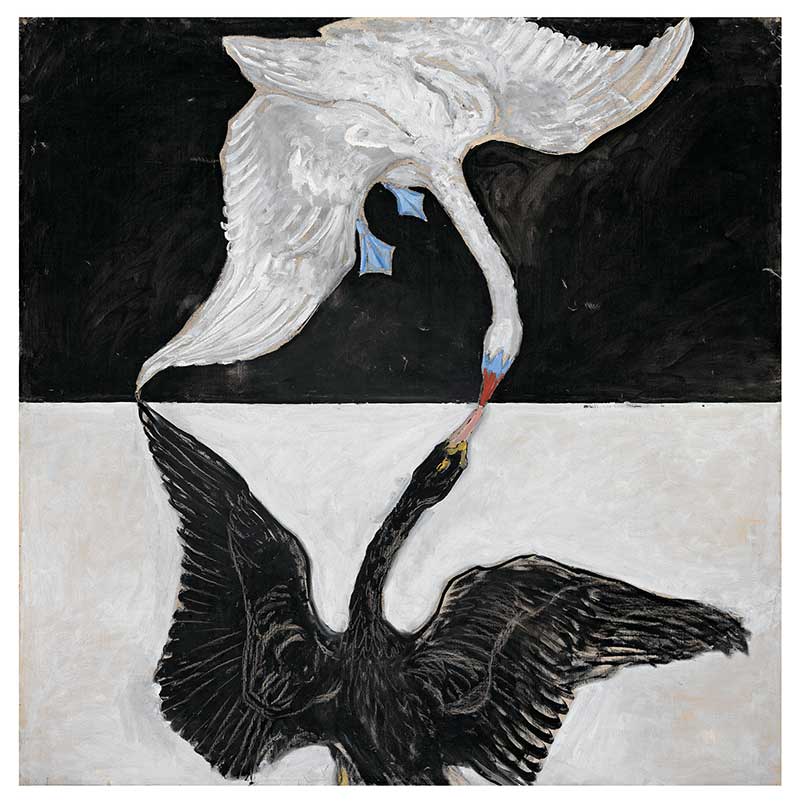
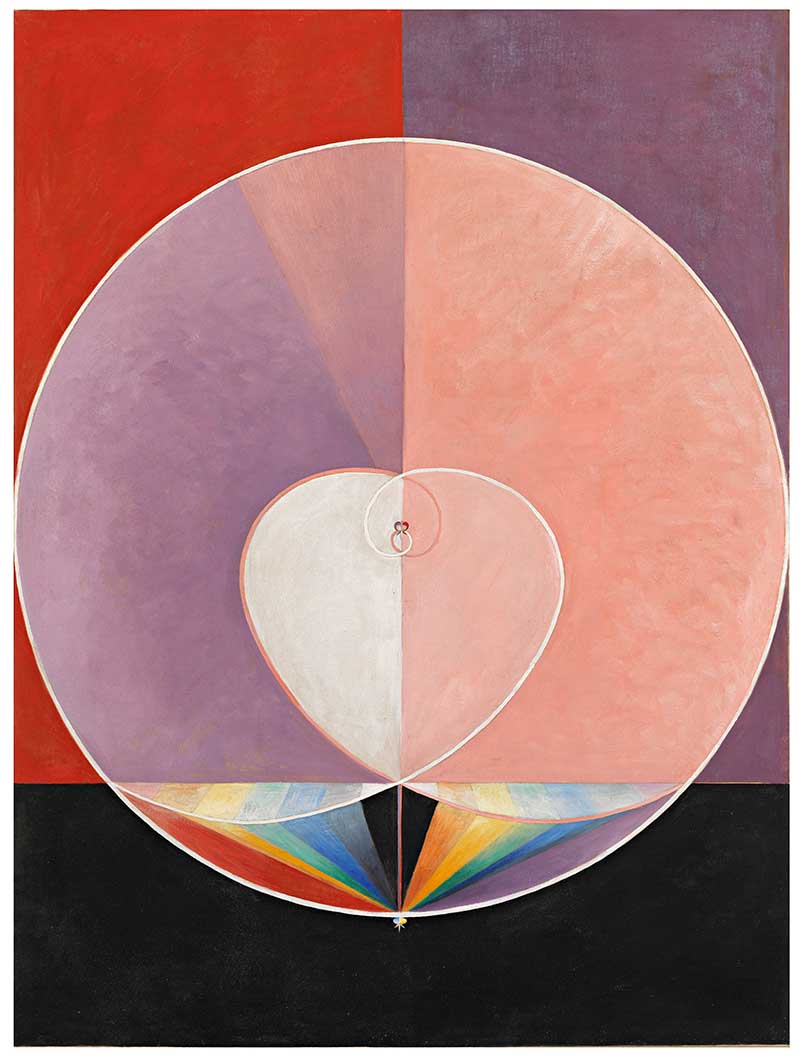
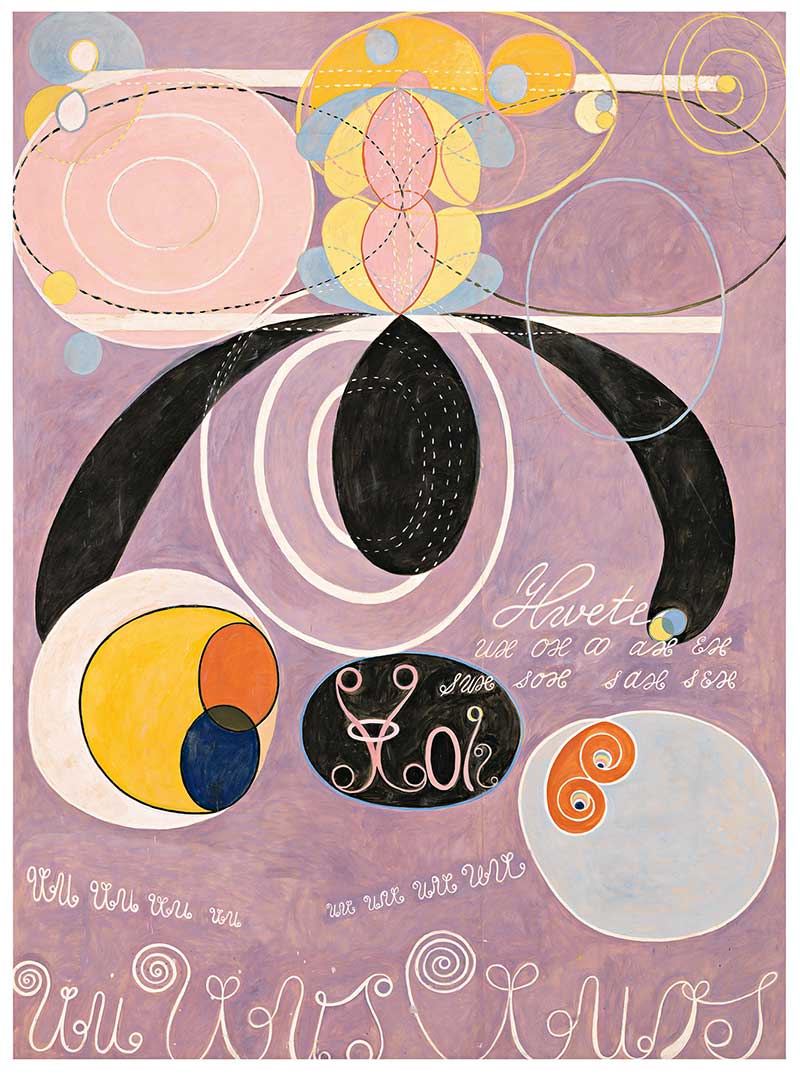
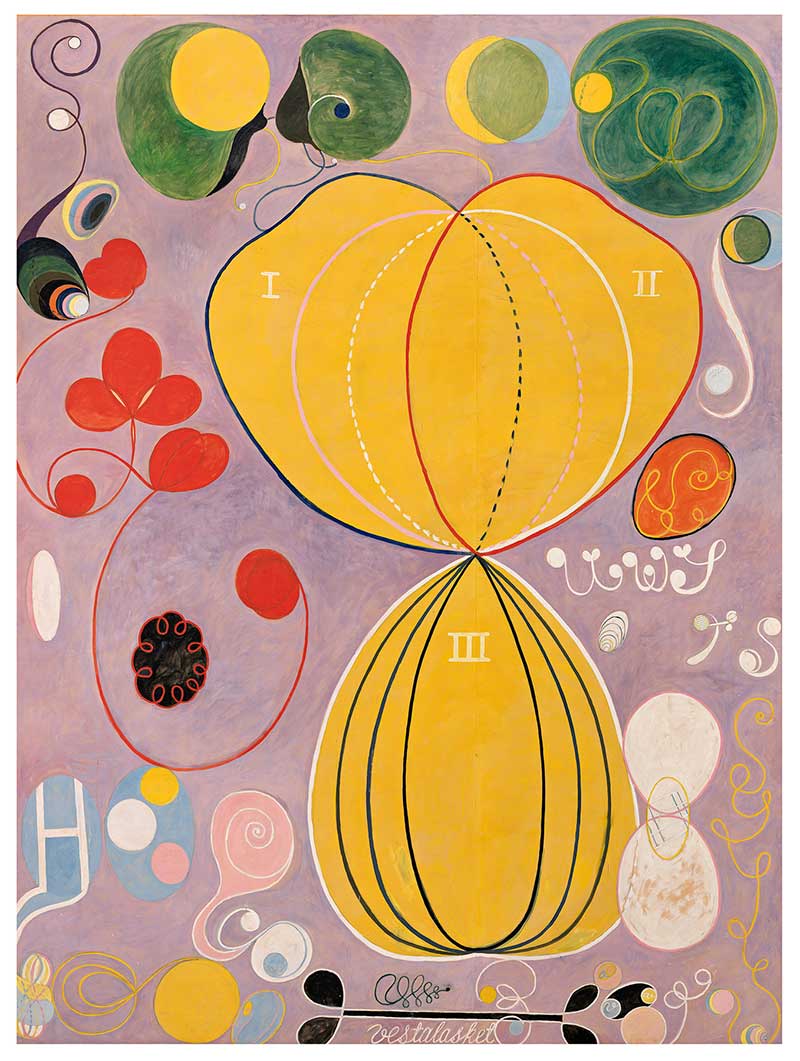
Produced between 1906 and 1915, The Paintings for the Temple – the artist’s best-known body of work – comprise 193 works across eleven series, with titles evocative of spiritual ascent and the cosmos: Primordial Chaos, Evolution, The Seven-Pointed Star, The Swan, The Dove and The Altarpieces.
Preserved intact since their creation, they nonetheless owe their rediscovery to a series of near-miracles. Long kept out of sight in a studio on the island of Munsö, 45 kilometres from Stockholm, they were meant to remain sealed, in accordance with the artist’s wishes. Convinced that her work was too far ahead of its time, Hilma af Klint requested that at least 20 years pass after her death before it was brought into the light. Deeply connected to the world of spirits, the artist, who died in 1944, seems almost to have foretold the fate of her paintings.
Convinced that her work was too far ahead of its time, Hilma af Klint requested that at least 20 years pass after her death before it was brought into the light.
In the aftermath of the Second World War, these works could easily have slipped into oblivion, suffered damage or disappeared altogether. Their survival owes much to the interest of the anthroposophist artist Olof Sundström, who, in 1945, saved them at the last moment from certain destruction. ‘Following the artist’s death, he not only cleared out the shed, but also compiled an inventory. His “HAK” reference numbers are still in use today,’ notes Pascal Rousseau, a historian of abstraction and curator of the Hilma af Klint exhibition at the Grand Palais. A second decisive turning point came in the 1980s, thanks to the art historian Åke Fant, who helped bring this body of work to international attention, notably through the exhibition “The Spiritual in Art” at the Los Angeles County Museum of Art (LACMA) in 1986, where it met with widespread acclaim.
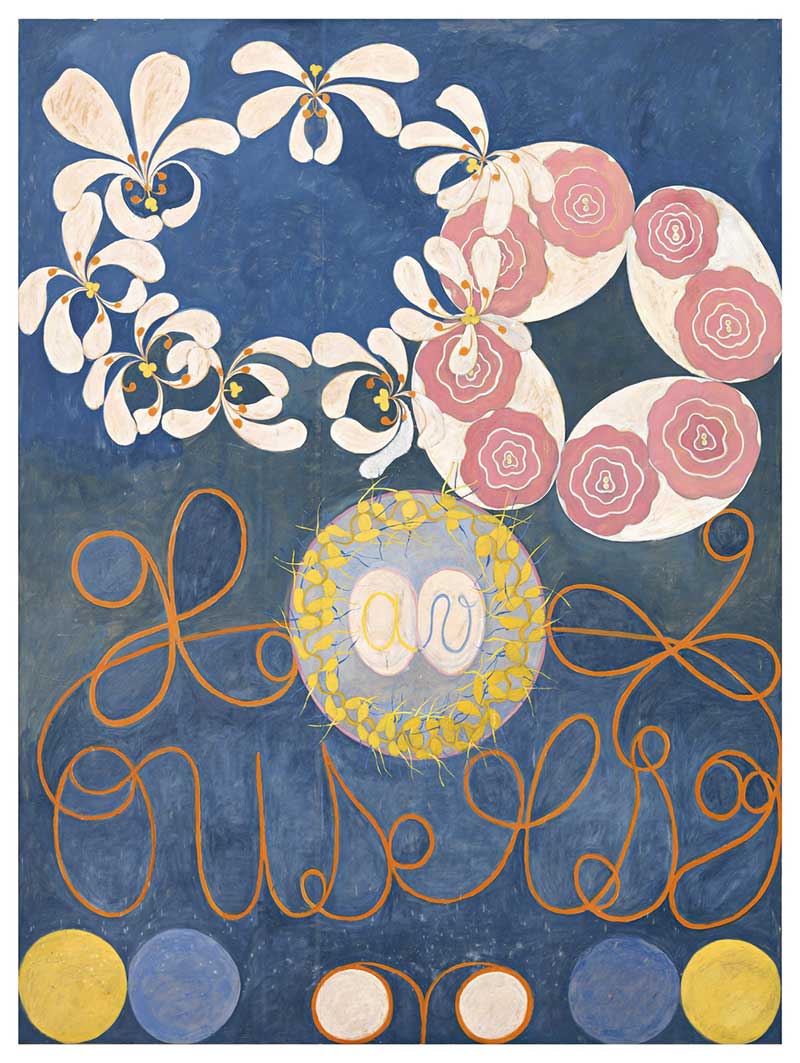
Courtesy of the Hilma af Klint Foundation
Photo © Moderna Museet, Stockholm
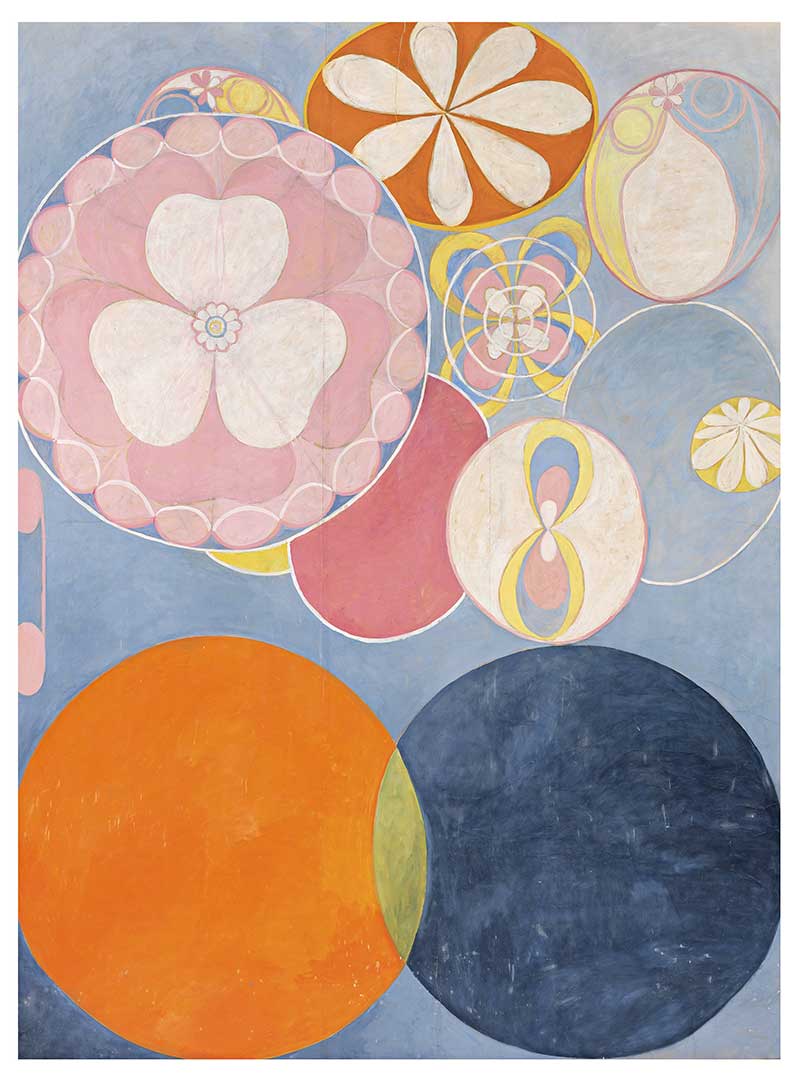
Courtesy of the Hilma af Klint Foundation
Photo © Moderna Museet, Stockholm
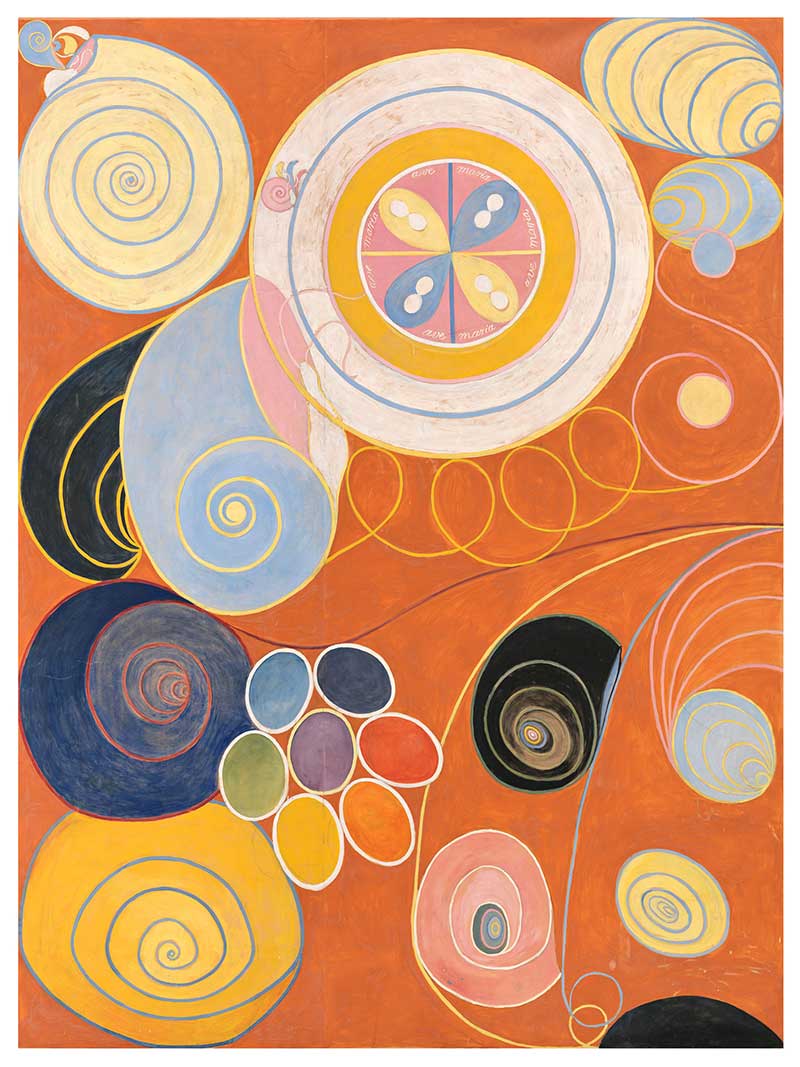
Courtesy of the Hilma af Klint Foundation
Photo © Moderna Museet, Stockholm
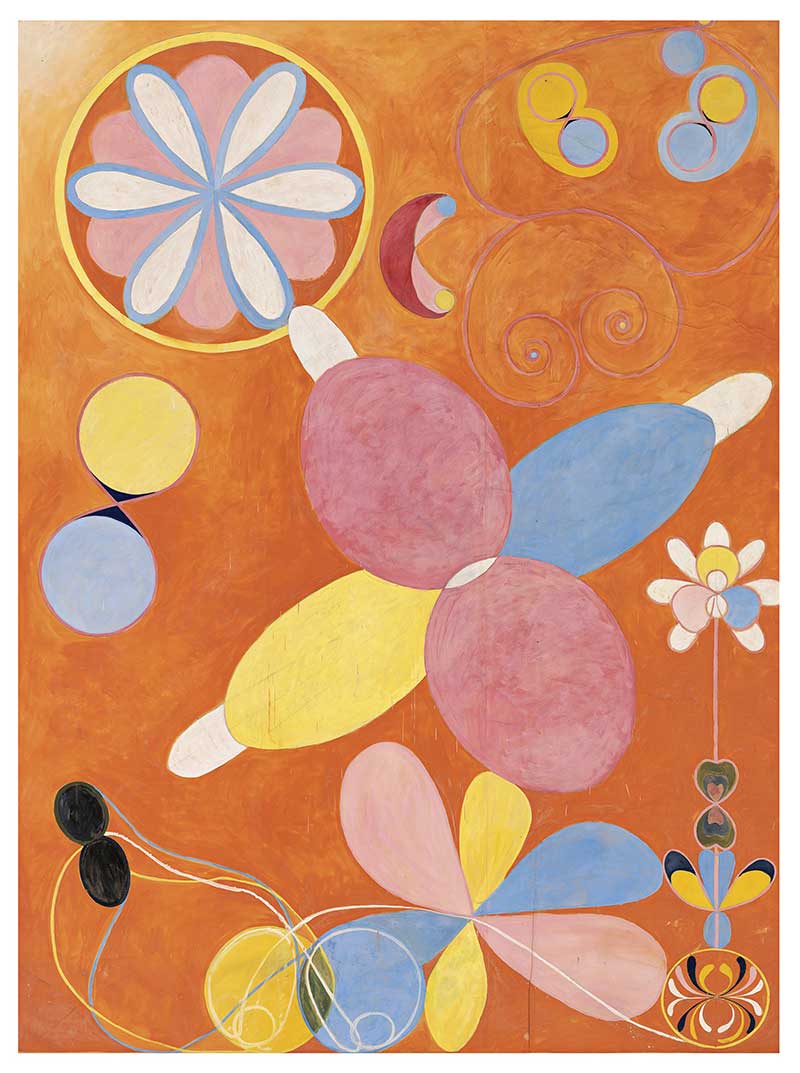
Courtesy of the Hilma af Klint Foundation
Photo © Moderna Museet, Stockholm
Courtesy of the Hilma af Klint Foundation
Photo © Moderna Museet, Stockholm
Courtesy of the Hilma af Klint Foundation
Photo © Moderna Museet, Stockholm
- grands 1 (copie 1)
- grands 2 (copie 1)
- Grands3 (copie 1)
- Grands 4 (copie 1)
- grands 6 (copie 1)
- dix plus grands 7 (copie 1)
Hilma and the Rapping Spirits
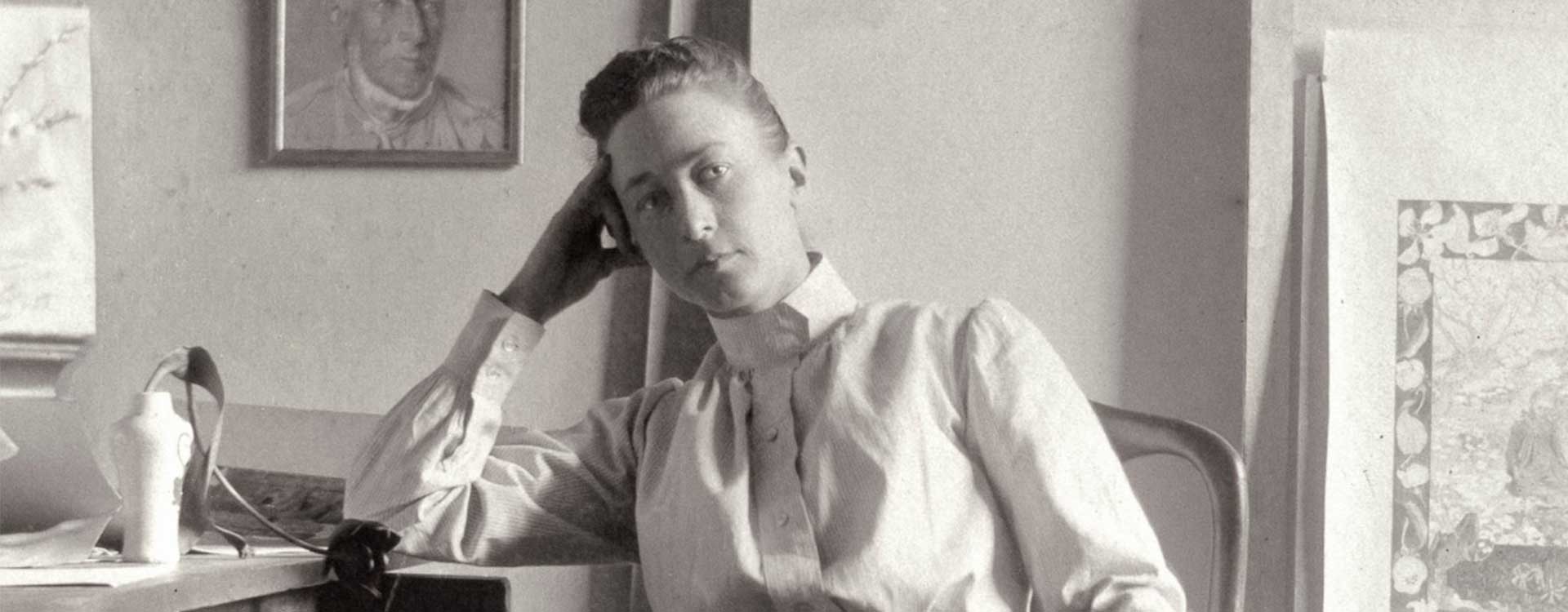
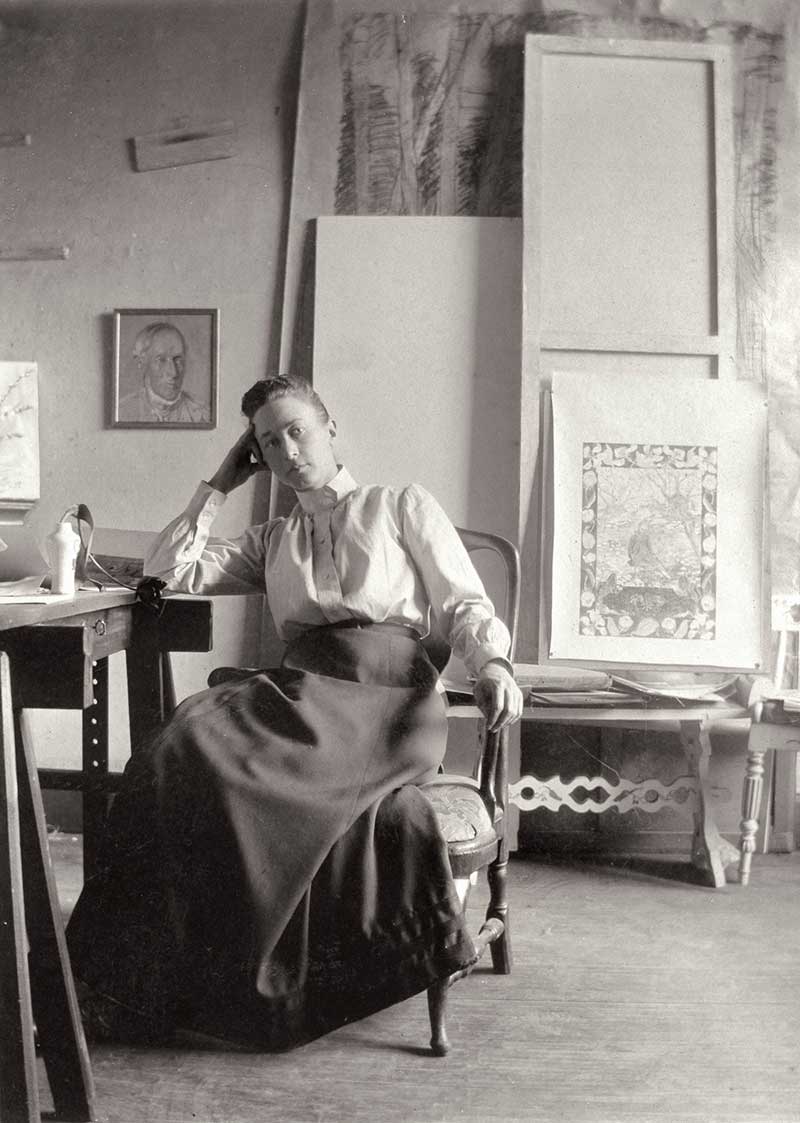
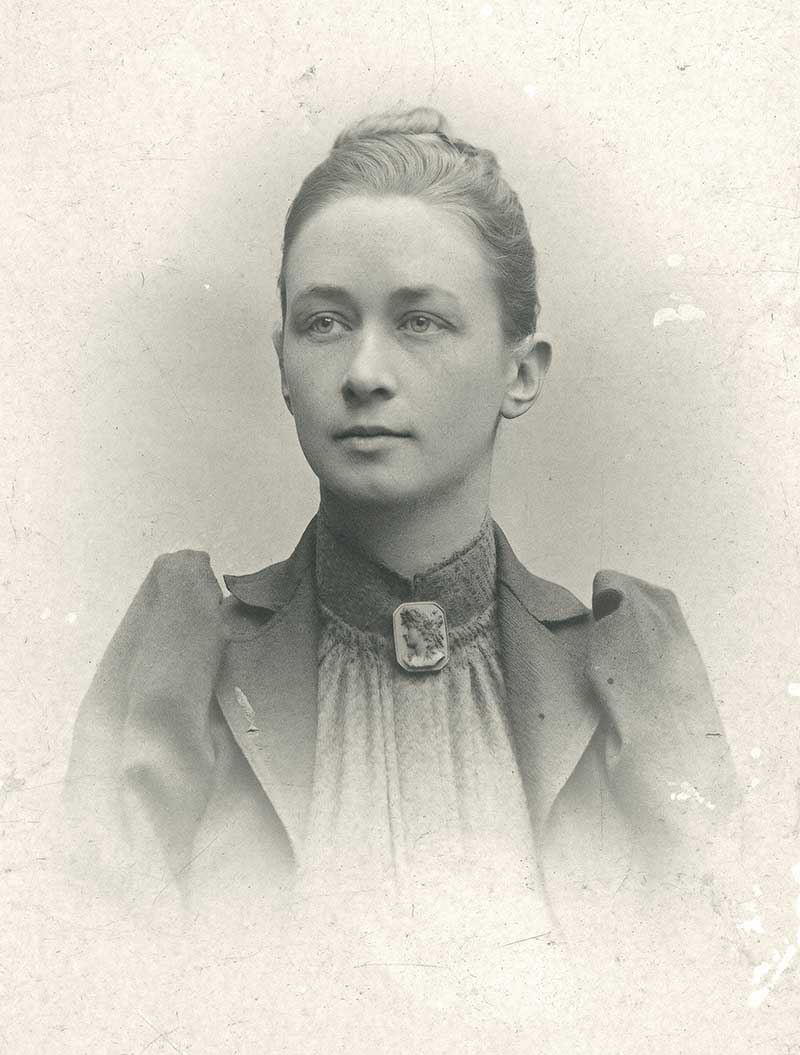
Born in 1862 in Solna, Sweden, Hilma af Klint grew up in a noble Lutheran family made up largely of naval officers and scientists. Her father, a cartographer, worked at Karlberg Palace in Stockholm. From an early age, she developed a keen interest in nature and botany, particularly during summers spent with her family on the island of Adelsö, in the heart of Lake Mälaren. In a Sweden that was relatively progressive for its time, she received a rigorous artistic education: after studying technical drawing, she entered the Royal Academy of Fine Arts in Stockholm in 1882, where she trained in academic painting. Among her teachers was Kerstin Cardon, a painter then widely respected by her peers, with whom she studied classical portraiture. But a tragic event soon deepened her need to communicate with the invisible world: the death of her younger sister Hermina, who was only ten. She became a vegetarian, dressed only in black, and began forging her first ties with Spiritualist circles.
At a time when capitalism seemed only to generate conflict, many were searching for forms of escape. From the 1850s onward, spiritualism took hold with remarkable force: people reimagined the world around card tables, tipping guéridons and rapping spirits. The Fox sisters had set the movement in motion in the United States. Allan Kardec in Paris, Victor Hugo in Jersey – all practised automatic writing. In London, meanwhile, a British artist was experimenting with automatic drawing, as Pascal Rousseau explains: ‘Georgiana Houghton (1814–1884, editor’s note), who had formal artistic training, was already exhibiting her spirit drawings by 1860. It’s Jackson Pollock a century ahead of time, but on a small scale.’ Rousseau, who also curated the compelling exhibition “Hypnosis” at the Musée d’arts de Nantes in 2020, notes that ‘Georgiana Houghton remains rooted in that Spiritualist dimension, whereas with Hilma af Klint it takes on a more performative, more painterly form.’
Until 1904, af Klint’s artistic life was largely defined by the most conventional of portraits and figurative landscapes – a classical body of work that afforded her financial independence. Yet beneath that official surface, an abstract practice informed by spiritualism was already beginning to emerge, shaped by the theosophical ideals that had been circulating in Stockholm since 1889. Pascal Rousseau sums up the doctrine theorised by the Russian philosopher and occultist Helena Blavatsky as follows: ‘It is a form of religious syncretism that brings together Buddhism and Christianity, but also an obsession with the theory of evolution – in an anti-Darwinian sense. It is the fascination with an evolution of the species tending towards a pure spiritual being; in other words, the reverse of Darwin, who takes us back to the ape.’
Having graduated with honours from the Stockholm Academy of Fine Arts, Hilma af Klint met her alter ego, the artist Anna Cassel, as well as Sigrid Hedman, Mathilda Nilsson and the medium Cornelia Cederberg. Together, they co-founded the Friday Group, later known as De Fem – Swedish for “The Five”. Every Friday, they held sessions of automatic writing and drawing in an effort to enter into contact with spiritual entities. It was in this setting that af Klint received what she understood to be her pictorial ‘mission’: ‘You are to proclaim a new philosophy of life, and you yourself shall be part of the new kingdom. Your work will bear fruit.’ The task was to reconcile the earthly and the spiritual planes through painting. The biblical episode of Jacob’s ladder, with its ascending spiral linking the two worlds, offers a striking image of what was at stake.
In November 1906, Hilma af Klint embarked on the ambitious series The Paintings for the Temple under the authority of those ‘external psychic forces that she calls “guides” (…) which seem to determine at once the protocols, the techniques, the formats and the temporalities at work (the time taken to execute the paintings, as well as the delays and disjunctions surrounding their reception)’, as Pascal Rousseau writes in the exhibition catalogue.
Abstract, Surreal — and Even Gender-Fluid
From Anna Cassel to Thomasine Andersson, Hilma af Klint’s romantic relationships were largely with women – and in her work, a profusion of organic and vegetal forms emerges, including vividly life-filled, vulval flowers. During séances, she often assumed the persona of her male alter ego, ‘Asket’, effectively relinquishing the status of sole author. These works, dictated by external forces – her ‘guides’ – were conceived as collective creations. In doing so, she also moved beyond fixed gender categories, exploring a form of symbolic androgyny in which masculine and feminine merge within a coded visual language.
Abstract, surreal, conceptual, even psychedelic – and at times strikingly gender-fluid – Hilma af Klint’s work anticipates many contemporary currents while remaining deeply rooted in the spirit of its time, from Art Nouveau and spiritualism to Scandinavian folk traditions. Spiritualism, however, was never an end in itself: af Klint continually reinvented her practice. In this sense, she unsettles the canonical triumvirate of Kandinsky, Mondrian and Malevich, long regarded as the founding figures of abstraction and themselves influenced by theosophy. Through her use of automatic drawing, she also prefigures the Surrealists, while her vibrant chromatic range foreshadows the psychedelic and visual experiments of the 1960s and 1970s.
Abstract, surreal, conceptual, even psychedelic – and at times strikingly gender-fluid – Hilma af Klint’s work anticipates many contemporary currents while remaining deeply rooted in the spirit of its time, from Art Nouveau and spiritualism to Scandinavian folk traditions.
In total, Hilma af Klint left behind more than 1,300 works, along with around 150 notebooks filled with notes and spirit drawings, which serve as essential keys to her symbolic universe. Her work emerged within a moment of intense artistic ferment marked by the rise of Cubism and the earliest forms of abstraction, yet stands apart through its deeply spiritual and transcendent dimension.
More than a century after their creation, The Paintings for the Temple continue to exert their singular force. At the intersection of mysticism and modernity, they bear witness to the visionary intuition of an artist long kept in the shadows, now firmly established as a central figure in the history of art. ◼
Related articles
In the calendar
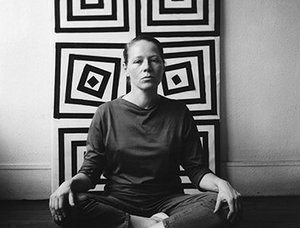
Portrait of the artist Hilma af Klint, c. 1895, photograph
Hilma af Klint, The Altarpiece, No. 1 (1915)
Oil and gold leaf on canvas, 237.5 × 179.5 cm, HaK187
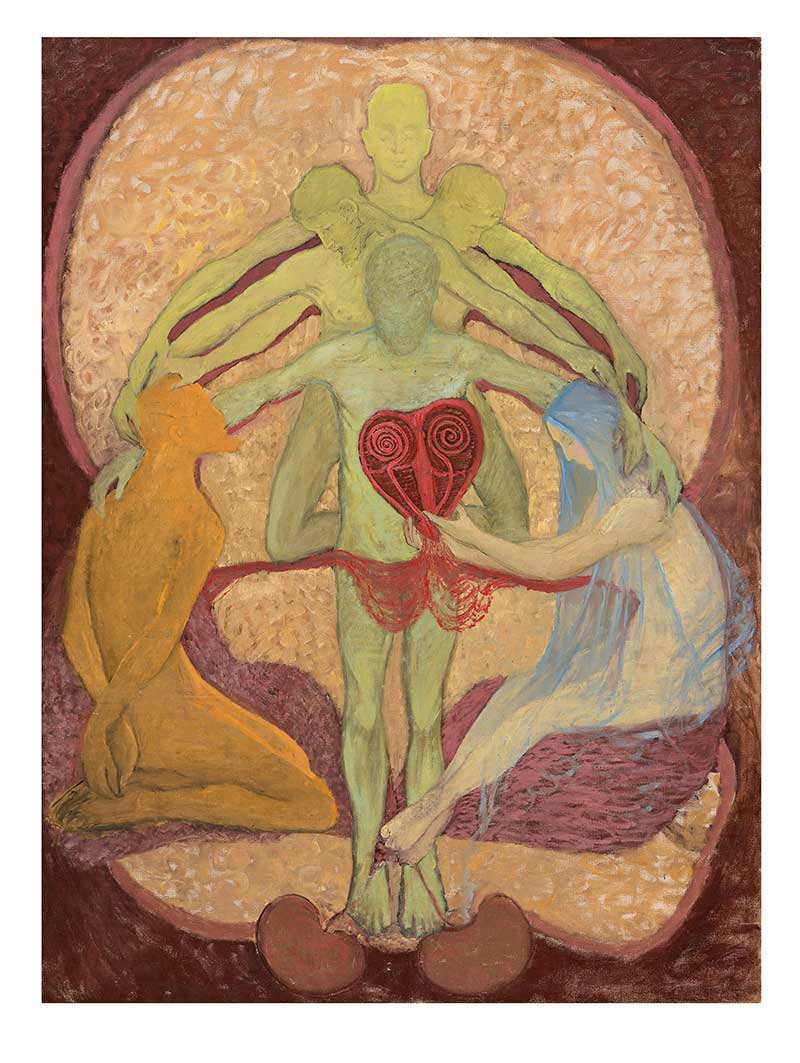
Hilma af Klint, The Large Figure Paintings, No. 4 (1907)
Oil on canvas, 150 × 118 cm, HaK041
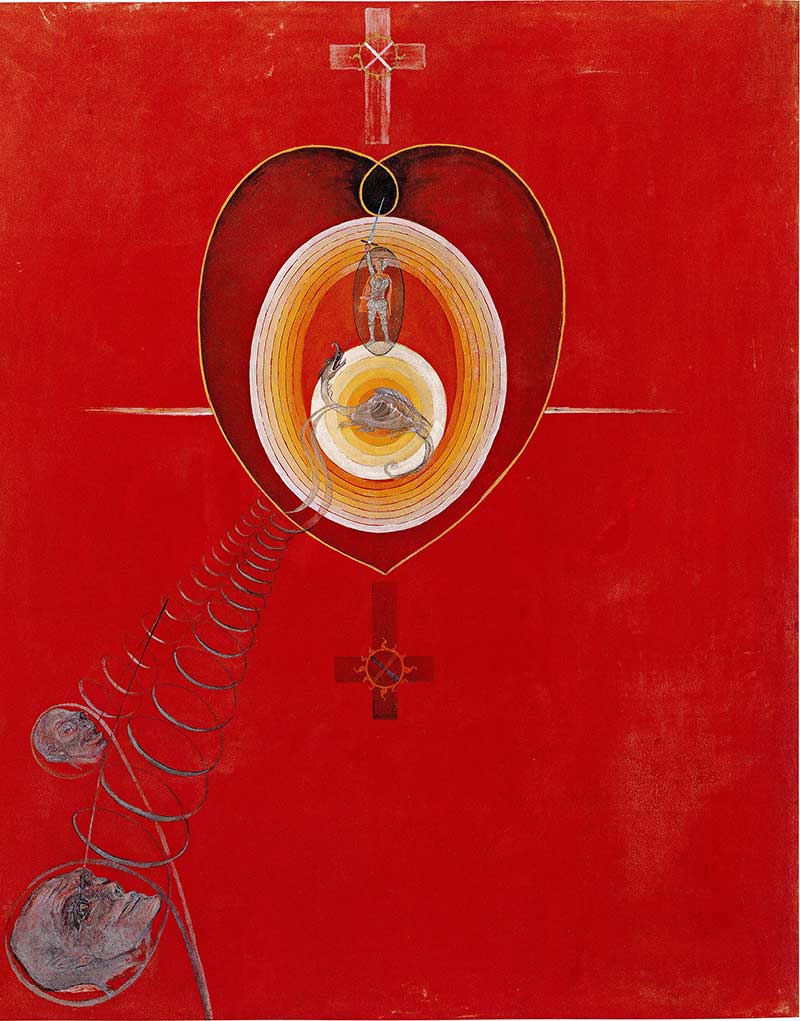
Hilma af Klint, The US Series, No. 5 (1913)
Oil on canvas, 156.5 × 114.5 cm, HaK130
Hilma af Klint, The Swan, No. 1 (1914–1915)
Oil on canvas, 150 × 150 cm, HaK149
Hilma af Klint, The Dove, No. 8 (1915)
Oil on canvas, 154 × 127 cm, HaK180
Hilma af Klint, The Dove, No. 2 (1915)
Oil on canvas, 155.5 × 115.5 cm, HaK174
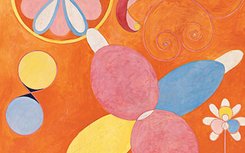
Hilma af Klint, The Ten Largest, No. 1, Childhood (1907)
Tempera on paper mounted on canvas, 322 × 239 cm, HaK102
Hilma af Klint, The Ten Largest, No. 2, Childhood (1907)
Tempera on paper mounted on canvas, 315 × 234 cm, HaK103
Hilma af Klint, The Ten Largest, No. 3, Youth (1907)
Tempera on paper mounted on canvas, 321 × 240 cm, HaK104
Hilma af Klint, The Ten Largest, No. 4, Youth (1907)
Tempera on paper mounted on canvas, 315 × 234 cm, HaK105
Hilma af Klint, The Ten Largest, No. 6, Adulthood (1907)
Tempera on paper mounted on canvas, 315 × 234 cm, HaK107
Hilma af Klint, The Ten Largest, No. 7, Adulthood (1907)
Tempera on paper mounted on canvas, 315 × 235 cm, HaK108
Courtesy of the Hilma af Klint Foundation
Photo © Moderna Museet, Stockholm